
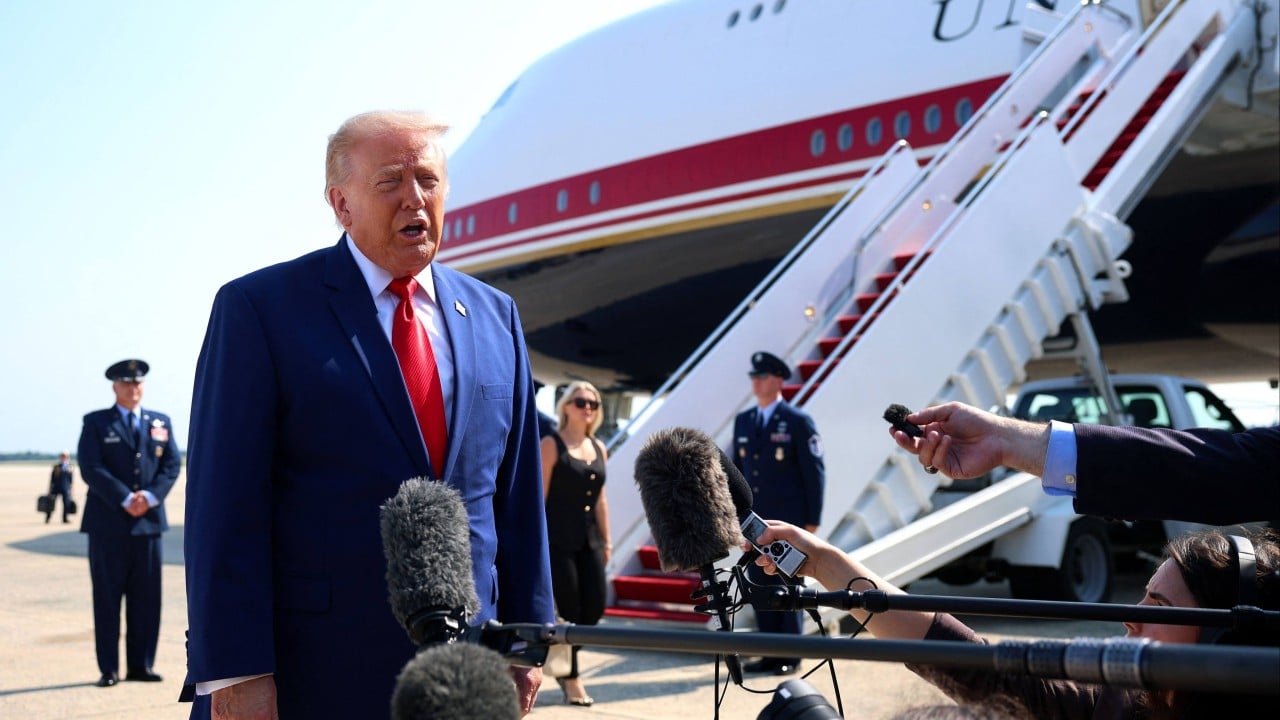
Inside the West Wing, a press briefing on July 22, 2026, set the tone for a stark escalation. President Donald Trump stood before a crowd of reporters and military families, moments before traveling to a ceremony honoring four U.S. service members killed in separate Iranian‑linked attacks in Jordan and Iraq. Behind the solemnity, Trump announced a new policy: “any time the Islamic Republic of Iran… I will destroy a bridge or power plant.” The declaration linked the fate of distant Iranian infrastructure to the memory of American fallen heroes, turning a memorial moment into a geopolitical warning.
On July 22, 2026, President Donald Trump warned that the United States would destroy an Iranian bridge or power plant each time Tehran attacks a vessel in the Strait of Hormuz, a threat announced hours before a ceremony for four slain U.S. service members.
Trump's July 22 Threat to Destroy Iranian Bridge or Power Plant
On July 22, 2026, President Donald Trump delivered the ultimatum during a White House press briefing. He quoted, “From this point forward, any time the Islamic Republic of Iran… I will destroy a bridge or power plant.” The statement was timed to precede his attendance at a ceremony honoring four U.S. service members killed in Iranian‑linked operations. By coupling the threat with a tribute to fallen troops, Trump aimed to frame the policy as a direct response to Iranian aggression against American personnel. This alignment of domestic heroism with foreign retaliation strengthens his narrative of protecting U.S. lives, while also signaling to Tehran that any further attacks will meet concrete, infrastructural damage.
Three Strait of Hormuz Attacks in Ten Days Damage $250 Million
Over the past ten days, three separate assaults have struck commercial vessels navigating the Strait of Hormuz. Two oil tankers suffered anti‑ship missile hits, while a cargo ship endured a drone strike that injured one crew member. Combined repair costs and cargo loss are estimated at $250 million, according to maritime insurers. The rapid succession of incidents points to a coordinated Iranian campaign designed to choke a chokepoint that moves roughly 20% of the world’s oil. For a ship captain sailing from Saudi Arabia to the United Arab Emirates, the heightened risk forces route changes that add up to 300 miles (480 km) and increase fuel consumption, directly raising operating expenses.
Iran’s 2019‑2024 Escalations Prompt Limited U.S. Strikes
In 2019, Iran launched a missile at a Saudi oil tanker, a move that prompted a brief U.S. naval response. The following year, a drone attack targeted a U.S. base in Iraq, leading to a limited retaliatory strike on a suspected Iranian facility. Most recently, a 2024 ballistic missile launch damaged a U.S. Navy destroyer, after which Washington conducted a measured cruise missile barrage against a coastal radar site. Each of these episodes resulted in calibrated U.S. actions, avoiding broader escalation. Trump’s current “bridge or power plant” ultimatum diverges from that pattern by threatening civilian infrastructure, suggesting a shift toward punitive measures that could broaden the conflict’s scope.
Karun River Bridge and Ahvaz Power Plant Key to Iran’s Freight and Energy
The bridge slated for possible destruction spans the Karun River near Ahvaz, carrying roughly 40% of Iran’s internal freight traffic. Adjacent to the bridge, a power plant delivers 2,000 MW, enough to energize half of the Khuzestan industrial zone, which includes petrochemical complexes comparable in output to a mid‑size U.S. refinery. Disabling these assets would disrupt supply chains for steel, chemicals, and agricultural products, potentially prompting labor unrest in a region already strained by water shortages. For American oil traders, a shutdown would mean delayed shipments from Iranian fields, translating into higher spot prices for gasoline at the pump in cities like Houston.
Article 51 of the UN Charter permits self‑defense, but does not automatically legitimize pre‑emptive strikes.
Legal and Diplomatic Risks of Unilateral U.S. Action on Iranian Infrastructure
United Nations Charter Article 51 authorizes self‑defense following an armed attack, while the 2002 Authorization for Use of Military Force (AUMF) extends that permission to threats posed by Iran. NATO allies have publicly urged restraint, emphasizing collective security over unilateral moves. Russia, meanwhile, pledged “support for Iran’s sovereignty,” positioning itself as a counter‑balance to U.S. pressure. Without explicit UN Security Council endorsement, the United States risks diplomatic isolation, which could embolden other regional powers to challenge the post‑Cold War order. This legal ambiguity may also affect future congressional authorizations for force, as lawmakers weigh the precedent set by targeting civilian infrastructure.
Brent Rise to $85 After Trump’s Threat Sparks Insurance Surge
Within hours of Trump’s July 22 warning, Brent crude futures climbed 2% to $85 per barrel on the London ICE exchange. Shipping insurers raised premiums for vessels transiting the Strait of Hormuz by roughly 30%, reflecting the heightened perception of risk. The International Energy Agency warned that sustained disruption could create a shortfall of up to 1.5 million barrels per day, enough to shave 3% off global consumption. Higher transport costs and insurance fees feed directly into the price of imported gasoline, meaning a family in Detroit could see monthly fuel bills rise by $40‑$60 if the threat materializes into actual attacks.
Trump’s 38% Approval and Midterm Timing Shape Hardline Threat
Polls released in June 2026 placed Trump’s approval rating at 38%, a figure that trails his 2024 peak but remains higher than many of his Republican rivals. The 2026 midterm elections are scheduled for November 3, placing the threat just three months before voters head to the polls. National security advisers from the National Security Council have advocated a “show‑of‑force” policy, arguing that a decisive stance could rally the base and distract from domestic economic concerns. By issuing the ultimatum now, Trump leverages foreign policy as a political tool, hoping to convert heightened patriotism into electoral support.
What Comes Next as Tehran Weighs U.S. Ultimatum
Iranian officials have not issued an immediate public response, but internal reports suggest senior commanders are debating whether to escalate or seek a diplomatic de‑escalation channel through the United Nations. Should Tehran choose retaliation against the Karun bridge or Ahvaz plant, the resulting civilian impact could force the Iranian government to address domestic dissent, potentially reshaping internal power dynamics. Observers will watch for signals from Russia and China, whose positions could either cushion Iran against isolation or pull the region into a broader geopolitical contest. Monitoring the next week’s naval deployments and diplomatic filings will indicate whether Trump’s threat remains a rhetorical device or translates into kinetic action.
For more on this, see trump threatens bomb iranian bridge or power plant after hormuz attacks.