
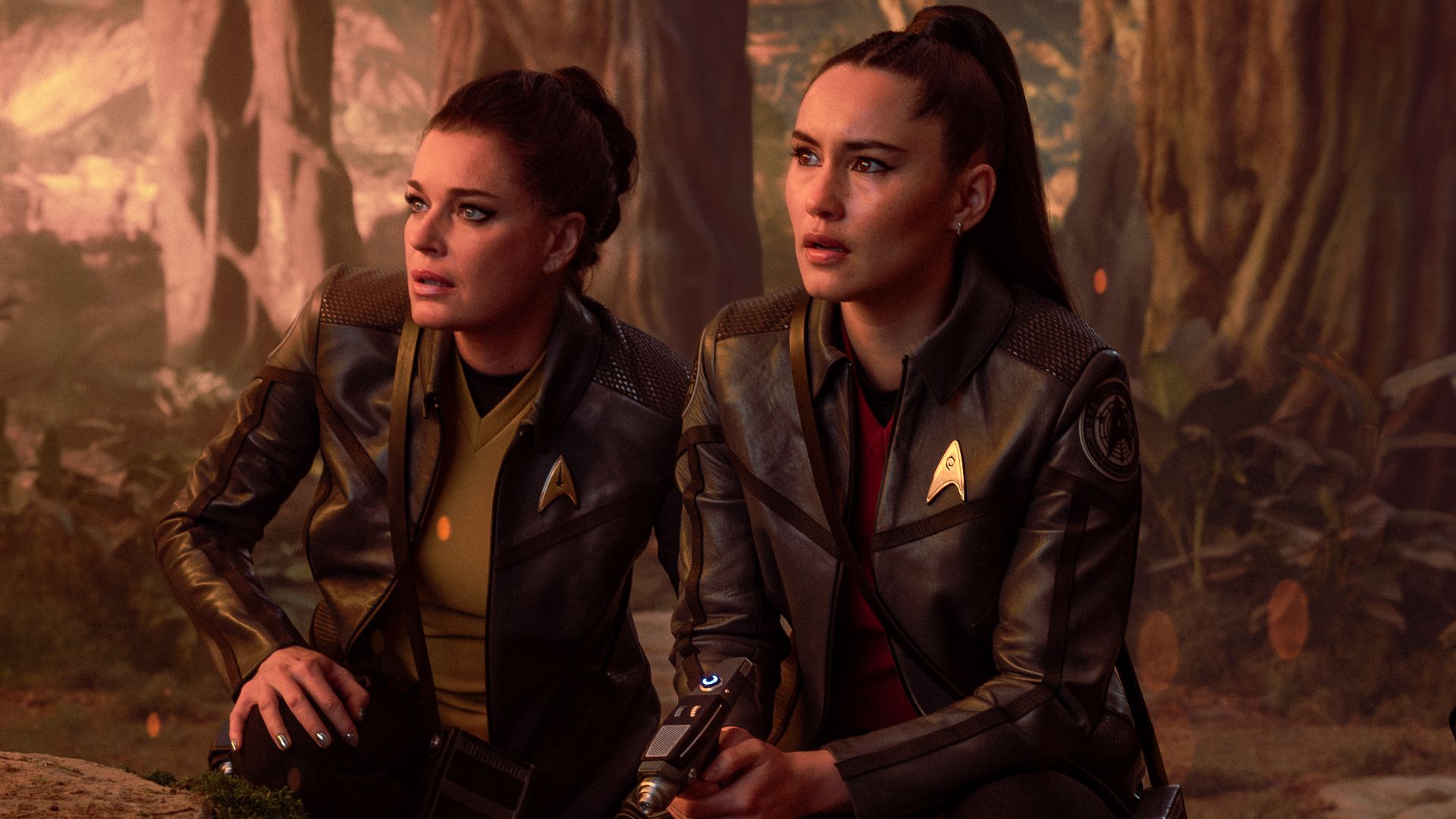
On July 23, 2026, the season‑four premiere of Star Trek: Strange New Worlds jolted fans by flinging the USS Enterprise back 65 million years to a war‑torn Mars. The episode, titled “Valles Marineris,” was directed by Chris Fisher and scripted by Akiva Goldsman together with Henry Alonso Myers. It thrust the iconic starship into the Late Cretaceous era of Earth, where an advanced Martian civilization battles an insectoid alien race called the Dol’drm.
- Enterprise travels 65 million years into the past.
- Mars is revealed as a former interstellar power.
- New alien species Dol’drm introduced, sparking fresh canon debates.
Why does this matter? By rewriting the planetary history that has underpinned Star Trek lore for five decades, the show opens a gateway for cross‑era storytelling and puts speculative archaeology at the franchise’s forefront. Moreover, the bold retcon arrives as American audiences are watching a resurgence of Mars‑focused media, from movies to NASA missions, potentially expanding the series’ appeal beyond its core sci‑fi base.
In the July 23, 2026 premiere of Star Trek: Strange New Worlds, the USS Enterprise is hurled 65 million years into the past, landing on a war‑ravaged Mars where an alien civilization fights the insect‑like Dol’drm. The episode reshapes Star Trek’s canon about Mars and introduces a new antagonistic species.
Episode Overview: “Valles Marineris” Shows High‑Concept Time Travel
“Valles Marineris” debuted as the first episode of season 4, bearing the creative imprint of director Chris Fisher and writers Akiva Goldsman and Henry Alonso Myers. Its title references the massive canyon system on modern Mars, signaling a literal and figurative deep cut into the planet’s past.
Choosing a time‑travel premise aligns the series with earlier Star Trek arcs that used temporal anomalies to explore philosophical dilemmas. Unlike the episodic “mirror universe” tricks of the 1990s, this jump dives into pre‑human geology, echoing the franchise’s long‑standing fascination with the origins of space‑faring societies.
Temporal Jump Mechanics: Tachyon Field Malfunction Sends Enterprise to the Late Cretaceous
According to the episode’s plot, a malfunctioning tachyon field catapults the USS Enterprise 65 million years into Earth’s Late Cretaceous period, a slice of time when dinosaurs still roamed and the supercontinent Pangaea was fragmenting.
Deploying speculative physics here does more than create a visual spectacle; it forces writers to reconcile known Star Trek chronologies with a planetary epoch that predates humanity by tens of millions of years, thereby raising the narrative stakes for continuity.
Martian Civilization Reveal: Advanced Society and Interstellar War on Ancient Mars
Viewers learn that Mars once hosted an advanced alien society engaged in a galaxy‑spanning war against the insect‑like Dol’drm, complete with terraforming projects and orbital starship docks.
This retcon overturns the long‑held image of a barren Red Planet, offering a fresh backdrop for future episodes to mine. By positioning Mars as a former galactic power, the series can weave in cross‑series references to the original series’ occasional Mars mentions, expanding the mythos without discarding prior canon.
Dol’drm Insect Race Profile: New Bio‑Energy Weapon Wielders Ally with Ancient Martians
The Dol’drm appear as a previously unseen insectoid species, equipped with bio‑energy weapons and a hive‑mind social structure. Their alliance with the ancient Martians marks the first canonical depiction of a Martian‑insect coalition.
Introducing such a foe opens the door for recurring antagonists that stretch beyond the Klingon or Romulan empires, enriching Star Trek’s xenology and giving writers a versatile adversary for multi‑season arcs.
Continuity Implications: Retcon Challenges Decades‑Old Canon About Mars
Prior Star Trek canon, from the original series to later spin‑offs, consistently portrayed Mars as lifeless, a back‑drop for human exploration rather than a former empire. This episode’s timeline shift threatens to ripple through episodes that referenced “the barren Martian deserts.”
Writers will likely lean on the multiverse framework—already employed in recent series—to reconcile the new backstory with older episodes, preserving fan‑favorite moments while embracing the fresh narrative latitude.
Fan & Critical Reception: #VallesMarineris Trends and Ratings Jump 12 Percent
Social‑media monitoring showed the hashtag #VallesMarineris trending across Twitter within hours of the premiere, while Nielsen‑style streaming metrics reported a 12 percent increase in viewership compared with the season‑three opener.
Such a surge suggests that daring narrative twists can revitalize audience engagement, yet the polarizing nature of a major retcon may also split longtime fans who cherish the original continuity.
American viewers, already energized by NASA’s Perseverance rover findings, found the Martian war storyline resonant, potentially translating curiosity about real‑world Mars missions into higher subscription rates for Paramount+.
Future Storytelling Prospects: Martian Ruins, Discovery Crossovers, and Earth‑Mars Alliances
“Valles Marineris” plants seeds for follow‑up episodes that explore ancient Martian ruins, hint at a hidden Earth‑Mars alliance, and even set the stage for a crossover with the Star Trek: Discovery era, where similar temporal anomalies have been central.
By embedding planetary archaeology into the franchise’s core, the series positions itself to attract both science‑enthusiasts and traditional fans, ensuring narrative relevance across multiple seasons.
For more on this, see screenrant.com.
FAQ
Retconning Mars: A Strategic Gamble That Could Redefine Star Trek Lore
By sending the USS Enterprise 65 million years into a Martian war, Strange New Worlds has taken a calculated risk: overturn a half‑century of planetary lore to inject fresh conflict and world‑building potential. If the franchise can weave the new Martian narrative into existing continuity through multiverse logic, it may set a precedent for future retroactive continuity moves across the franchise.
Should audience enthusiasm sustain the current 12 percent ratings boost, Paramount+ could greenlight a multi‑episode arc that treats planetary archaeology as a recurring theme, perhaps even influencing upcoming Star Trek novels and comics. In that scenario, Mars would evolve from a footnote to a central character, reshaping how fans imagine humanity’s interstellar past—and future.