
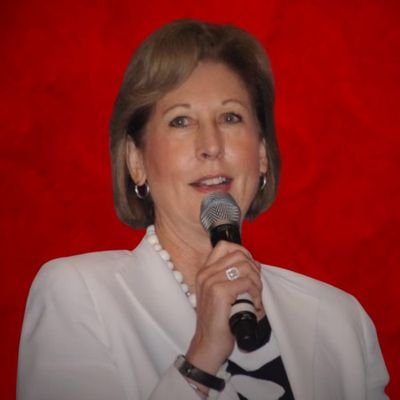
When a video of a Shia mosque ceremony in Dearborn surfaced on July 19, 2026, it ignited a firestorm on social media and revived long‑standing debates about immigration, radicalization, and free speech in the United States. Former Trump lawyer Sidney Powell reposted the clip, calling the content “dangerous” and “disgusting,” and her post quickly amassed tens of thousands of likes and shares.
- Powell’s X post on July 19, 2026 highlighted a sermon praising Ayatollah Ali Khamenei and denouncing the United States.
- The video, recorded at a Dearborn Shia institution, featured children chanting anti‑American slogans and references to “martyrdom.”
- Critics argue the incident underscores gaps in vetting immigrants and monitoring extremist rhetoric on U.S. soil.
Understanding why this episode matters requires more than noting the viral numbers. Dearborn hosts one of the nation’s largest Arab‑American populations, and the mosque’s rhetoric touches on geopolitical tensions that can influence domestic security, community cohesion, and policy discussions in Washington. As the nation grapples with an ongoing immigration debate, the incident offers a tangible example of how foreign ideologies may manifest in local religious settings.
On July 19, 2026, Sidney Powell reposted a video from a Dearborn, Michigan Shia mosque that praised Iran’s leader and condemned the United States. The X post drew over 19,000 likes, nearly 10,000 reposts, and sparked nationwide criticism of pro‑Iran rhetoric on American soil.
Background
Dearborn, Michigan, home to roughly 150,000 residents of Arab descent, has long served as a cultural hub for Shia Muslims who immigrated after the 1979 Iranian Revolution. MEMRI documented similar gatherings as early as 2005, noting that public celebrations of Iranian political holidays often feature anti‑U.S. slogans. This demographic concentration explains why the city regularly hosts events that draw both supporters of Tehran and vocal opponents.
Because the city’s population exceeds that of many U.S. counties, local officials have faced pressure to balance religious freedom with security concerns. The Dearborn Police Department, which employs 120 officers, has historically relied on community liaison officers to monitor potential extremist activity. Recent budget cuts, however, reduced the department’s intelligence staff by 15 percent, limiting its capacity to track overseas propaganda that surfaces in local mosques.
Event Details
Video footage released by Dr. Maalouf on X shows a podium framed by portraits of Ayatollah Ali Khamenei and former President Mahmoud Ahmadinejad. Poet‑lawyer Hassan Salamey declared Khamenei “the great leader of our time” and labeled the United States as “built by devil‑worshipers.” Usama Abdulghani, another speaker, urged children to “grow up with this jihad culture.” These statements were captured on a camera positioned near the front row, where dozens of children raised fists in unison.
Original footagereveals that the event was organized by the Hadi Institute, a Shia cultural center that has hosted annual commemorations for Qasem Soleimani since 2020. The institute’s website lists the gathering as a “memorial for martyrs of 86 years of jihad,” aligning the local ceremony with broader Iranian narratives of resistance.
Powell's Reaction
Sidney Powell, who gained national attention for her 2020 election lawsuits, posted the video on her X account (ID: 2078695092689227878) with the caption, “The United States of America is slowly committing suicide.” Her post recorded 19,000 likes and 9,800 reposts within 24 hours, indicating a rapid spread among conservative audiences.
Powell’s commentary reflects a broader shift in her public messaging: from election integrity to “national security watchdog” themes. Since 2024, she has authored three opinion pieces linking immigration policy to “cultural erosion,” and she has frequently cited MEMRI reports as evidence of foreign influence. By framing the Dearborn event as a symptom of “open‑border policies,” Powell amplifies a narrative that resonates with voters concerned about border enforcement.
Security and Community Impact
Dearborn schools, which enroll over 12,000 students, now face heightened scrutiny after the video showed minors participating in extremist chants. The Dearborn Public Schools district announced a review of its curriculum on July 22, 2026, to ensure that civic education includes balanced perspectives on foreign policy. This response aims to preempt potential radicalization among youth while preserving religious instruction.
Media archivereports that local law enforcement has increased patrols around the Hadi Institute, yet officers caution that overt surveillance could alienate the broader Arab‑American community. Balancing security with trust is crucial; a 2023 study by the Pew Research Center found that 62 percent of Arab Americans felt “more suspicious” of police after high‑profile raids, suggesting that heavy‑handed tactics may backfire.

Opposition and Wider Debate
Critics argue that Powell’s portrayal exaggerates the threat and fuels Islamophobia. The American Civil Liberties Union released a statement on July 23, 2026, condemning “the vilification of an entire faith community based on the actions of a few.” Community leaders, including Imam Mohammad Al‑Hussein of the Islamic Center of America, emphasized that the Hadi Institute represents a minority viewpoint within the broader Shia population.
Iranian‑American business owners, many of whom run auto parts shops and restaurants in Dearborn, expressed concern that the incident could damage local economies. A coalition of 27 merchants filed a letter to the Michigan Economic Development Corporation on July 24, 2026, asking for “protective measures against economic fallout from hate‑driven boycotts.” Their plea highlights how political rhetoric can ripple through unrelated sectors, affecting livelihoods far beyond the mosque’s walls.
For readers tracking related geopolitical developments, a recent piece on U.S. precision strikes illustrates how Washington’s broader strategy against Iran may intersect with domestic concerns about extremist propaganda.

Frequently Asked Questions
Conclusion
Powell’s amplification of a Dearborn mosque video illustrates how a single localized event can become a flashpoint in national debates over immigration, security, and religious freedom. While the footage captures extremist rhetoric, the broader fallout reaches school districts, police departments, and small business owners who must navigate the fallout of heightened scrutiny. Balancing constitutional protections with genuine security concerns will require nuanced policies that address radicalization without alienating the city’s sizable Arab‑American population. As the United States continues to grapple with its immigration framework, incidents like this underscore the need for community‑focused strategies that prevent extremist ideas from taking root while preserving the pluralistic values that define the nation.