
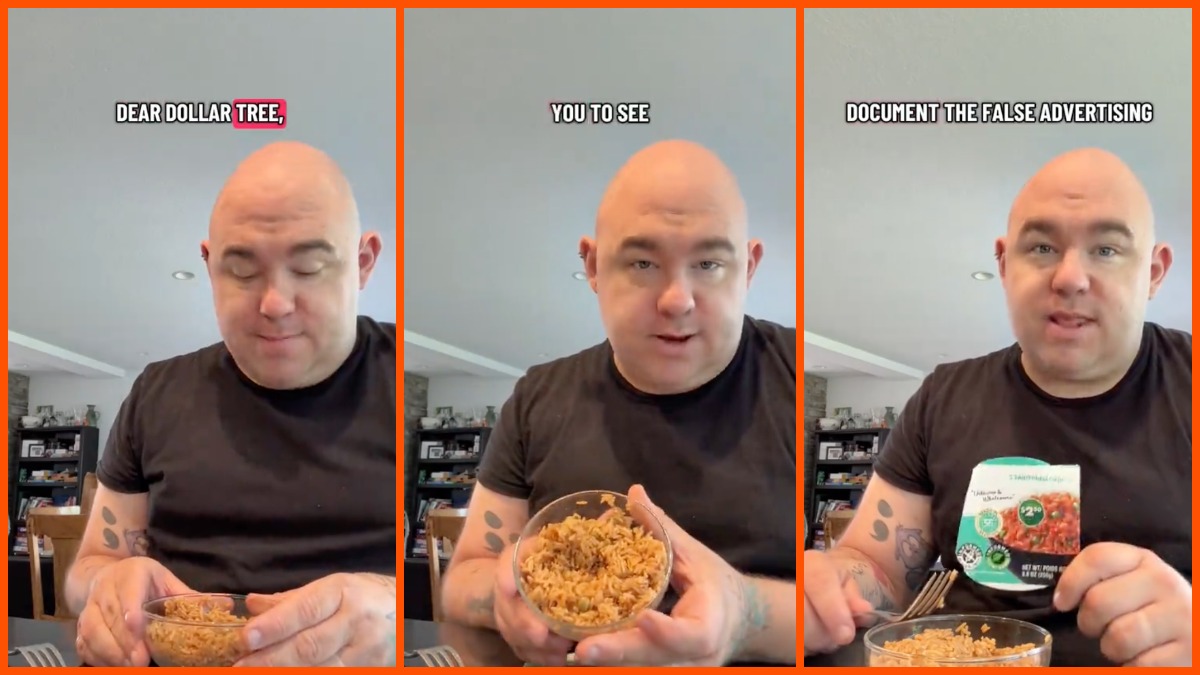
As of July 23 2026, a single TikTok clip has turned a $1.99 frozen meal into a flashpoint for low‑income shoppers nationwide. On July 15 2026, Tim Campbell, a third‑year Bachelor of Social Work student, posted a video that has already amassed 1.2 million views and 45 thousand comments. In the clip, Campbell holds a Dollar Tree “Vegetable Fried Rice” box next to a microwaved serving, pointing out that the bowl on the package looks far richer than the actual portion. The discrepancy hits a demographic that relies on dollar‑store groceries to stretch a tight budget, raising questions about how visual marketing can exploit price‑sensitive consumers. With affordable meals serving as a staple for millions of SNAP participants, the debate taps into broader concerns about truth in advertising and food security.
On July 15 2026, TikTok creator Tim Campbell posted a video showing Dollar Tree’s $1.99 frozen vegetable fried rice looking nothing like the box illustration, sparking a debate about false advertising that has drawn over 1.2 million views and prompted consumer backlash.
Tim Campbell’s TikTok expose sparks nationwide debate
The video, posted on July 15 2026, quickly climbed to 1.2 million views and generated 45 k comments, all centered on the $1.99 Dollar Tree frozen meal. Campbell’s “Dollar Store Dinners” series frames the clip as a social‑work‑inspired investigation into how low‑income families stretch grocery dollars. By broadcasting the mismatch on a platform where short‑form videos routinely go viral, the expose forces retailers to confront a demographic that rarely has the luxury of trial and error. The sheer scale of the audience amplifies consumer scrutiny, nudging larger chains to pre‑emptively audit packaging claims before they become a legal headache.
Beyond the raw numbers, the clip underscores a cultural shift: shoppers no longer accept “good enough” when a product’s image promises a hearty bowl. When a $1.99 item appears to deliver less than half the advertised vegetables, the perceived breach of trust can ripple through discount‑store loyalty, especially among families whose weekly grocery list is measured in dollars, not dozens.
Packaging versus plate: the visual mismatch explained
The box features a glossy illustration of a steaming bowl brimming with mixed vegetables, carrots, red bell peppers, and rice. Campbell’s microwaved portion, however, turned out to be roughly 80 % brown rice, a sliver of carrots, and zero red bell peppers, despite those ingredients appearing on the label.

That visual gap can mislead shoppers into believing they’re getting a more nutrient‑dense meal, which in turn influences buying decisions when budgets are razor‑thin. When a low‑cost product appears to deliver a balanced mix of vegetables, consumers may feel justified in spending limited cash on a single item, only to discover they’ve been short‑changed at the dinner table.
Sun Valley Foods and labeling responsibilities under USDA rules
The frozen rice is produced by Sun Valley Foods, a private‑label manufacturer that supplies several discount chains. According to the USDA Food Labeling Guide, an ingredient must be “substantially present” to be listed on the front of a package, a standard that goes beyond a token pinch of carrot or pepper.
FTC’s 2023 guidance on “visual representation” clarifies that images may not create a false impression of a product’s composition. Because Sun Valley Foods supplies the product, any misrepresentation could expose both the manufacturer and Dollar Tree to liability, highlighting a regulatory gap where low‑margin private‑label goods often escape rigorous oversight.
FTC Act and 2022 false‑advertising precedent shape legal risk
The Federal Trade Commission Act expressly bans deceptive packaging, and a 2022 FTC case against a snack brand that used oversized chocolate chips on its wrapper resulted in a $2.5 million settlement. That ruling emphasized that visual exaggeration, even without outright false statements, can trigger enforcement.
Applying that precedent, the Dollar Tree fried rice could be seen as a “visual misrepresentation,” especially given the FTC’s 2023 guidance. If regulators deem the illustration misleading, the agency could seek remedies ranging from corrective advertising to monetary penalties, setting a costly example for other discount retailers.
Local impact: low‑income shoppers in the Midwest feel the pinch
In states like Ohio and Indiana, where Dollar Tree stores cluster near food‑insecure neighborhoods, the controversy hits home for families that rely on the chain for staple meals. A recent survey by the Midwest Food Access Coalition found that 37 % of respondents said they purchase frozen meals from dollar stores at least three times a week. When a $1.99 product fails to deliver promised vegetables, those families may need to stretch an already‑tight grocery budget to include fresh produce elsewhere.
This micro‑level fallout illustrates why the TikTok debate matters beyond internet clicks: it directly affects the nutritional intake of thousands of Midwestern households that count on affordable, pre‑packaged meals to fill the dinner table.
For more on this, see wegotthiscovered.com.
Frequently Asked Questions
Echoes of the 2015 Kellogg’s cereal lawsuit linger for Dollar Tree
The Dollar Tree episode mirrors the 2015 Kellogg’s “Frosted Flakes” case, where a misleading cartoon image prompted a $3 million settlement and a mandatory redesign of the cereal’s packaging. In that saga, consumer backlash forced a multinational to prioritize transparency over brand nostalgia. Dollar Tree’s current predicament, though on a smaller scale, suggests a similar trajectory: sustained public pressure may compel the retailer and Sun Valley Foods to overhaul their visual marketing or face FTC enforcement. If history repeats, shoppers could soon see a more honest bowl on the shelf, and discount chains might adopt stricter internal checks to avoid costly legal entanglements.