
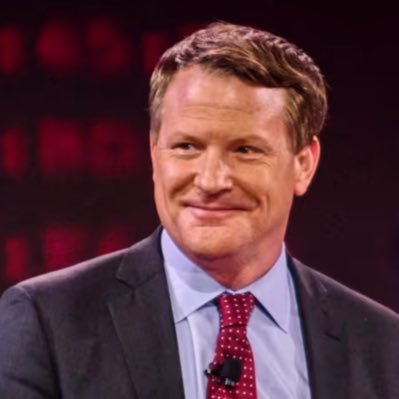
Camera crews captured Mayor Zohran Mamdani standing on the steps of City Hall on July 18, 2026, his hand raised as a muted X video played on a nearby screen. In the clip, the 112th chief of New York City declares an “active conversation” about arresting Israeli Prime Minister Benjamin Netanyahu should the leader set foot in the city for the United Nations General Assembly in September. The statement ignited a firestorm that rippled through municipal chambers, the State Department, and diplomatic corridors in Jerusalem. Local activists cheered, while federal officials warned of an unprecedented clash between NYPD officers and U.S. Secret Service agents. Understanding why a municipal official would entertain such a move requires unpacking legal authority, political calculus, and historical precedents that rarely surface in everyday city governance.
New York City Mayor Zohran Mamdani announced on July 18, 2026 that he is exploring the possibility of arresting Israeli Prime Minister Benjamin Netanyahu during the September United Nations General Assembly, citing alleged war‑crimes charges and local legal avenues.
Background and Rise of Zohran Mamdani
Born on October 18, 1991, in Kampala to Indian‑Ugandan parents, Zohran Kwame Mamdani obtained U.S. citizenship in 2018 and entered politics by winning the 36th New York State Assembly District seat in 2022. He assumed office as the city’s first Muslim and first Asian American mayor on January 1, 2026, after defeating former Governor Andrew Cuomo in the 2025 mayoral race. His platform promised rent freezes, city‑owned grocery stores, and a climate‑resilient heat‑wave response plan.
Those campaign promises resonated with a coalition of tenant groups, immigrant communities, and progressive labor unions, positioning Mamdani as a symbol of demographic change in a metropolis historically led by white, male politicians. This identity shift amplifies every foreign‑policy pronouncement he makes, because constituents view his stance on Israel as an extension of broader social‑justice ambitions.
The viral clip of Mamdani’s statement illustrates how his administration leverages social media to mobilize grassroots pressure, a tactic that proved decisive in his 2025 upset.Legal possibilities for a municipal arrest
New York City law permits the mayor to direct the local law department to investigate crimes that occur within the five‑borough jurisdiction, yet the doctrine of diplomatic immunity shields foreign heads of state from arrest by any sub‑national entity. The International Criminal Court issued a provisional arrest warrant for Netanyahu in March 2024 over alleged war crimes in Gaza, a charge that United Nations member states are obliged to consider.
A New York City mayor cannot unilaterally detain a foreign head of government without federal cooperation.Even if the mayor’s office drafts an indictment, execution would require coordination with the U.S. Department of Justice and the Secret Service, whose primary mandate is to protect visiting dignitaries. Past incidents, such as the 1998 UK arrest of former Chilean dictator Augusto Pinochet, demonstrate that even robust international warrants can be stalled by host‑nation legal interpretations, suggesting Mamdani’s plan may encounter similar procedural roadblocks.
Domestic and international political reaction
White House Press Secretary Karine Jean-Pierre issued a statement on July 19, 2026, emphasizing that any attempt to detain a foreign leader would be “handled at the federal level” and warning of “serious diplomatic repercussions.” Israeli Foreign Ministry spokesperson Eytan Rubin countered that “New York City has no jurisdiction over Israel’s elected premier.” Congressional leaders on both sides of the aisle raised concerns, with Senate Majority Leader Chuck Schumer describing the mayor’s comments as “reckless” and Representative Alexandria Ocasio‑Cortez defending Mamdani’s “moral courage.”
Social‑media analysis shows a spike of 4,200 mentions of “Mamdani arrest” within two hours of the video’s release, reflecting a polarized public discourse. Video footage of protests outside City Hall illustrates how the mayor’s stance has galvanized both pro‑Palestinian rallies and pro‑Israel counter‑demonstrations, turning a municipal policy debate into a flashpoint of global diaspora politics.
Historical parallels and precedent
In 1998, former Chilean dictator Augusto Pinochet was arrested in London under a Spanish extradition request, a case that hinged on the principle of universal jurisdiction for human‑rights violations. British courts eventually released him on health grounds, but the episode underscored how international arrest warrants can clash with sovereign immunity claims.
Comparing Pinochet’s detention to Mamdani’s proposal highlights a crucial difference: Pinochet was apprehended by a sovereign nation’s police, whereas any New York City action would rely on cooperation from the federal government, which controls the Secret Service detail assigned to the UNGA delegation. Media coverage of the Pinochet saga revealed that diplomatic pressure often forces host nations to balance legal obligations against political alliances, a balance Mamdani must now navigate.
What may happen after the UNGA session
The United Nations General Assembly convenes from September 12‑28, 2026, with New York City slated to host dozens of bilateral meetings on the sidelines. Security plans already allocate 350 Secret Service agents to protect Netanyahu, while the NYPD has prepared a contingency unit for crowd control. If Mamdani’s legal team files a subpoena before September 5, federal prosecutors will be forced to weigh the political fallout of either supporting or rejecting the request.
Analysts point to the July 13, 2026 statement by Senator Marco Rubio calling for a “U.S. campaign to dismantle the International Criminal Court” as an indicator that the federal executive may prioritize diplomatic stability over the mayor’s prosecutorial zeal. Rubio’s campaign could shape the Department of Justice’s response, potentially leading to a formal denial of any municipal arrest attempt.
Frequently Asked Questions
Conclusion
Mayor Mamdani’s flirtation with arresting a foreign prime minister transforms a local political statement into a test of international law, federal authority, and the city’s diplomatic reputation. As the September UNGA draws nearer, observers will watch whether federal agencies concede to municipal pressure or reaffirm the primacy of national foreign‑policy prerogatives. The next week’s filing deadline will determine whether this debate stays in the courtroom or escalates into a global diplomatic incident.