
Senator Lisa Murkowski refuted claims that the Gates family finances her political agenda on July 19, 2026.
Rogan O’Handley, a conservative commentator known online as @DC_Draino, posted a viral X message accusing Murkowski of being “bankrolled by radical left Kamala Harris/abortion advocate, Melinda Gates.” The post quickly gathered more than 26,000 likes, 12,000 reposts, and almost 460,000 views, thrusting the allegation into the national conversation about donor influence in Alaska’s elections. That matters because Murkowski’s moderate voting record has already drawn fire from the GOP’s right flank, and any perception of out‑of‑state billionaire support could amplify calls for stricter voter‑ID rules and campaign‑finance reforms in the state.
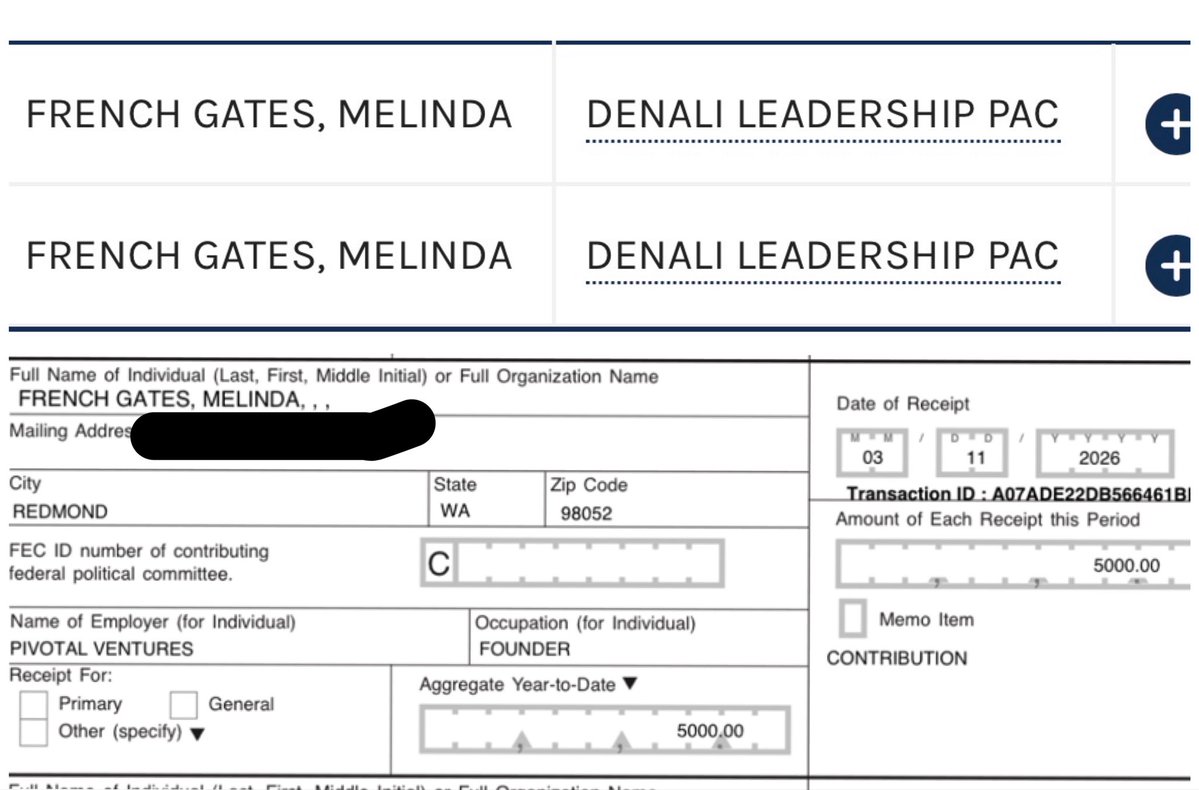
On July 19, 2026, Senator Lisa Murkowski denied that she receives funding from the Gates family after a viral X post claimed a $5,000 donation from Melinda French Gates to her Denali Leadership PAC and linked Bill Gates to Alaska’s ranked‑choice voting system.
Background: Murkowski’s Alaska Senate Career
Lisa Murkowski first entered the U.S. Senate in 2002 after Governor Frank Murkowski appointed her to fill his vacated seat. She secured a full term in 2004 and has won re‑election in 2010, 2016, and 2022, including a notable write‑in victory in 2010 when she lost the Republican primary.
Her reputation as a “maverick” stems from breaking with party leadership on abortion rights, judicial nominations, and, most recently, election legislation. That reputation matters because it positions her as a swing vote on contentious bills, making any donor narrative a potential lever for both allies and opponents seeking to sway her stance.

Funding Details: Melinda Gates Contribution
Federal election filings show a $5,000 contribution recorded on March 11, 2026 from “French Gates, Melinda” to the Denali Leadership PAC, which supports Murkowski’s statewide campaigns.
While the amount sits well within the legal $5,000 individual limit for a federal election cycle, analysts note that even modest gifts from high‑profile philanthropists can signal alignment on policy priorities, especially when the donor’s public advocacy contrasts with the recipient’s voting behavior on voter‑ID measures.
Ranked-Choice Voting and Bill Gates’ Involvement
Alaska voters approved Ballot Measure 2 in the November 2020 election, passing with 50.55% against 49.45% and instituting a top‑four nonpartisan primary followed by ranked‑choice voting in general elections.
Campaign‑finance reports indicate that organizations linked to Bill Gates contributed to advocacy groups that promoted the measure, though the former did not personally donate.
- Measure 2 received .2 million in total external support during the 2020 campaign.00,000 to pro‑RCV coalitions.
- Bill Gates‑affiliated entities contributed roughly
- Murkowski benefited in 2022 by capturing second‑ and third‑choice votes under the new system.
- The 2022 race featured four candidates advancing from the primary, a first for Alaska.
These figures illustrate how philanthropic networks can shape electoral structures, a dynamic that matters because structural changes like RCV can alter which candidates gain a decisive edge, especially in states with small, ideologically mixed electorates.
Political Reaction and Critic Opposition
Critics within the Republican base seized on the Gates narrative, with @DC_Draino labeling Murkowski a “backstabbing RINO on Voter ID” and accusing Bill Gates of engineering the RCV rollout to favor her.
Opponents argue that highlighting a single $5,000 donation distracts from broader concerns about out‑of‑state influence and fuels intra‑party battles that could jeopardize Murkowski’s re‑election prospects in a state where Republican primaries are increasingly dominated by Trump‑aligned contenders.
Broader Pattern: Billionaire Funding in State Elections
Recent cycles have seen billionaires such as Michael Bloomberg and George Soros pour millions into state‑level races, seeking to shape policy outcomes ranging from gun control to climate legislation.
Comparing Murkowski’s $5,000 gift to Bloomberg’s
What Comes Next for Murkowski and Alaska’s Election Laws
Alaska’s legislature is currently debating a stricter voter‑ID bill that would require photo identification at polls, a measure Murkowski has opposed on the grounds that it could suppress turnout in remote communities.
Should the bill pass, Murkowski may face heightened pressure from both the GOP’s conservative wing and advocacy groups demanding greater transparency in campaign financing, a dynamic that could reshape her legislative agenda ahead of the 2028 election cycle.
Frequently Asked Questions
Conclusion
While Murkowski’s denial addresses the immediate controversy, the episode leaves an unresolved question about how Alaska will balance donor transparency with the practicalities of implementing ranked‑choice voting. Will future campaign‑finance reforms curb out‑of‑state influence without undermining the state’s innovative electoral system, or will partisan battles render the issue a perpetual flashpoint in Alaskan politics?