
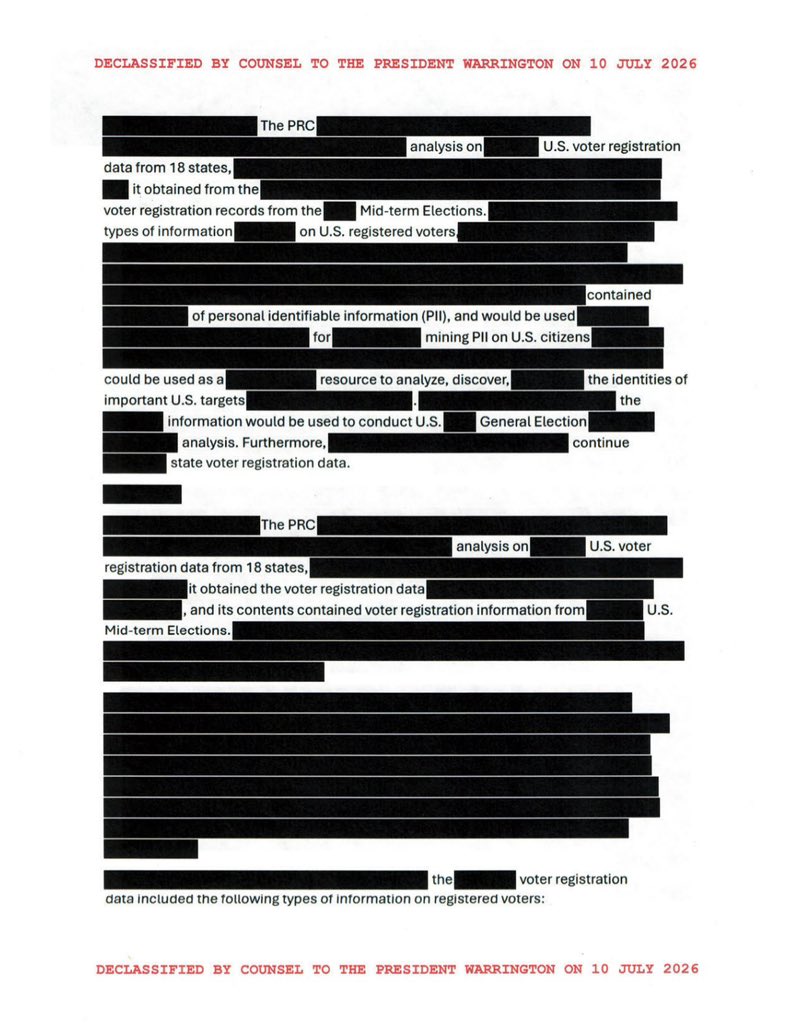
Conservative activist Scott Presler posted a viral X message on July 18, 2026 that claimed declassified records show the People’s Republic of China accessed voter registration data across 18 states, including Alaska. Presler’s post paired a brief caption with two heavily redacted images dated July 10, 2026, stamped “DECLASSIFIED BY COUNSEL TO THE PRESIDENT WARRINGTON.” By attaching the images, he turned a routine release into a flashpoint for the ongoing debate over election‑security legislation. The timing matters because the post arrived just days before a Senate vote on the SAVE America Act, a measure championed by voting‑rights advocates and opposed by a handful of Republicans. With voter‑registration databases already a target of foreign intelligence services, the claim injects fresh urgency into discussions about how open‑access laws interact with national security concerns.
On July 18, 2026, conservative activist Scott Presler posted declassified documents showing the People’s Republic of China accessed voter registration records in 18 U.S. states, prompting debate over the SAVE America Act and subsequent election‑security proposals.
Declassified documents
Declassified documents reveal that the People’s Republic of China obtained and analyzed voter registration records from 18 states, with visible fragments mentioning Alaska, Connecticut, Florida, Maryland, New York, Washington D.C., North Carolina and Kansas. Redactions obscure full details, yet legible sections list names, birth dates, mailing addresses, partial phone numbers, military affiliations and party registration.
Analysis shows that the inclusion of both demographic and political‑affiliation data could enable precise micro‑targeting, a tactic historically employed by foreign actors in the 2016 U.S. election cycle. Compared with earlier breaches that focused mainly on email credentials, this broader data set expands the scope of influence operations beyond digital phishing to offline voter‑mobilization strategies.

Presler profile
Presler built his reputation through grassroots voter‑registration drives in battleground states such as Pennsylvania, where his teams are credited with adding thousands of new entries to the rolls during the 2020 presidential election. His activism gained national attention after he organized a high‑visibility cleanup effort in Baltimore’s western district in 2022.
Because Presler’s credibility rests on mobilizing conservative voters, his decision to spotlight the China‑access claim positions him as a bridge between anti‑immigration rhetoric and concrete data‑security concerns. Prior to this episode, he had not publicly linked foreign‑interference to the SAVE America Act, marking a strategic shift that could reshape his appeal among lawmakers seeking tangible security arguments.
SAVE America Act
SAVE America Act proposals require documentary proof of U.S. citizenship—such as a passport, birth certificate with photo ID, REAL ID, or military documentation—when registering to vote in federal elections. The legislation also mandates photo‑ID presentation at the polls and expands penalties for fraudulent registrations.
Compared with the 2012 National Voter Registration Act, which emphasized ease of registration, the SAVE framework introduces a stricter verification layer that could reduce the pool of eligible voters by an estimated 1‑2 percent, according to a 2024 bipartisan study. That reduction may disproportionately affect younger voters and minority groups, a point critics cite when arguing the act could function as a modernized voter‑ID law.
Political reactions
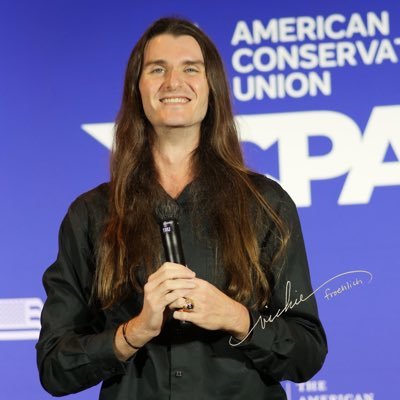
Senator Lisa Murkowski (R‑AK) publicly declared she will not support the SAVE America Act, arguing that the bill does not address the core issue of foreign data access. Murkowski’s stance aligns with a small coalition of Republicans skeptical of expanding federal oversight of voter rolls.
“DECLASSIFIED The People’s Republic of China (PRC) obtained the voter registration records for 18 states, including Alaska. Senator Lisa Murkowski (R‑AK) said she WON’T support the SAVE America Act, which would help to ensure only Americans vote in federal elections.”
Analysis indicates that Murkowski’s opposition may shift the legislative calculus, because her vote is often pivotal in close Senate margins. By framing the debate around foreign interference rather than domestic voter‑ID concerns, she forces proponents to broaden the narrative beyond partisan identity‑verification arguments.
Legal context
Public‑record statutes in most states, including the National Voter Registration Act of 1993, permit anyone—foreign governments included—to purchase voter‑registration files for a nominal fee. These statutes were designed to promote transparency but have unintentionally created a market for bulk data.
Because the declassified documents do not specify whether the PRC obtained the data via purchase or cyber‑intrusion, legal scholars argue that existing statutes may need amendment to differentiate between lawful access and hostile acquisition. Compared with the 2018 amendment that added a “state‑level” security clause, the current situation highlights a gap that could be addressed by new federal provisions.
Looking ahead
Before the July 2026 release, voter‑registration data remained largely unprotected from foreign purchase, with no federal bill explicitly targeting that vulnerability. After the disclosure, Senate committees have scheduled hearings to examine whether the SAVE America Act should incorporate safeguards against foreign procurement of public records.
Consequences could include a shift from voluntary state‑level data‑sharing agreements to a mandatory federal vetting process, a change that would mark the first time the federal government directly regulates the sale of voter‑registration information to non‑U.S. entities. If enacted, that rule would create a clear legal barrier where none existed, fundamentally altering the data‑access landscape for both domestic researchers and foreign actors.
Frequently Asked Questions
Conclusion
Blockquote material from Presler’s post forces legislators to confront a reality that predates the SAVE America Act: foreign entities can legally obtain U.S. voter data under current transparency laws. If Congress chooses to embed foreign‑entity screening into future election‑security bills, the procedural shift will move the nation from a passive openness model to an active protection stance. That transformation could reshape how states compile and share voter rolls, potentially limiting the ease of data acquisition that has long been taken for granted. Whether the Senate embraces those safeguards will determine if the declassified revelation becomes a catalyst for lasting reform or remains a momentary flash in the partisan media cycle.