
As of 7/23/2026, researchers announced a link between road‑traffic noise and Parkinson’s disease that could reshape how cities manage everyday sound levels. American commuters should note that the U.S. Environmental Protection Agency already cites 55 dB as a threshold for community noise complaints, meaning many U.S. neighborhoods already sit near the exposure range linked to higher Parkinson’s risk in the Danish cohort.
A new study published in Environmental Health Perspectives found that for every 11.5‑decibel increase in road‑traffic noise, the risk of developing Parkinson’s disease rises by about 3 %. The analysis covered 1.2 million Danish adults followed between 1995 and 2018, and the hazard ratio per 11.5 dB was 1.03 (95 % CI 1.01‑1.05).
Environmental Health Perspectives publishes 1.2 million‑person Danish cohort study
Researchers led by Dr. Maria Jensen at the University of Copenhagen released the findings in Environmental Health Perspectives. The sheer size—1.2 million participants tracked from 1995 to 2018—lets the team spot risk shifts as slight as a few percent, something earlier studies with tens of thousands of subjects could not resolve. This scale mirrors the transition in epidemiology toward “big‑data” approaches that can uncover subtle environmental contributors to neurodegeneration.
National road‑traffic model quantifies residential noise exposure
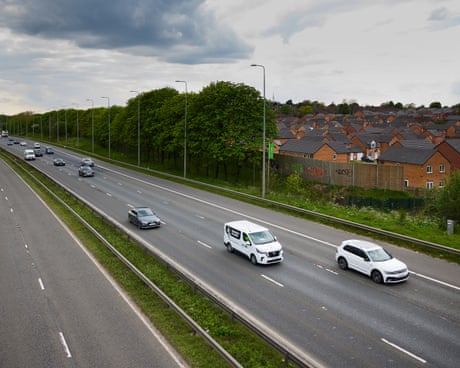
Noise levels were drawn from Denmark’s national road‑traffic model, which maps average residential exposure between 45 dB(A) and 80 dB(A). An 11.5 dB step corresponds to moving from 55 dB to 66.5 dB, a jump that many city dwellers experience when a quiet street is replaced by a new highway. By anchoring exposure to everyday sound variations, the study makes the metric directly applicable to urban planning decisions.
3 % Parkinson’s risk rise per 11.5 dB increase
Statistical analysis showed a 3 % higher Parkinson’s risk for each 11.5 dB rise, yielding a hazard ratio of 1.03 with a 95 % confidence interval of 1.01‑1.05. Moreover, 4 % of cases in the top‑exposure quartile were statistically attributable to noise, suggesting that a modest portion of the disease burden could be mitigated through quieter streets. Though the per‑decibel effect seems small, the ubiquity of traffic noise magnifies its public‑health relevance.
Swedish 2014 cohort and meta‑analysis contrast earlier findings
Earlier work, such as a 2014 Swedish cohort, reported no significant link between ambient noise and Parkinson’s, and a meta‑analysis of three studies produced a pooled hazard ratio of only 1.01. By leveraging a larger Danish sample and refined exposure modeling, the new research overturns previous ambiguity, illustrating how methodological upgrades can shift scientific consensus.
Parkinson prevalence and projected global rise frame health impact
In Denmark, roughly 0.2 % of adults currently live with Parkinson’s, a figure set to climb about 30 % worldwide by 2030. Simultaneously, more than 100 million Europeans endure nighttime noise above the World Health Organization’s 53 dB(A) guideline. When these two trends intersect, even a 3 % incremental risk translates into tens of thousands of additional cases, underscoring noise control as a potentially cost‑effective preventive measure.
EU and WHO noise standards versus Copenhagen 2025 plan
The World Health Organization recommends keeping daytime road noise below 45 dB(A), while the EU Noise Directive 2002/49/EC flags 55 dB(A) as the action threshold. Copenhagen’s 2025 traffic‑calming plan aims to reduce city‑center levels to under 50 dB, a target that sits between WHO advice and EU policy. Tightening standards could therefore address cardiovascular, mental‑health, and now neurodegenerative outcomes in a single regulatory sweep.
American cities confront comparable traffic noise levels
U.S. Census data indicate that over 30 % of households in Los Angeles, Chicago and New York experience average daytime road noise above 65 dB(A), surpassing the Danish exposure range linked to higher Parkinson’s risk. Residents in these metros may already be living in conditions that the Danish study flags as hazardous, suggesting that municipal noise‑abatement programs—such as Boston’s 2024 “Quiet Streets” initiative—could have neurological as well as quality‑of‑life benefits.
Mechanistic research gaps point to future interdisciplinary work
Scientists now call for mechanistic studies that explore how chronic auditory stress might trigger α‑synuclein aggregation, the protein hallmark of Parkinson’s. Investigations that also assess combined air‑pollution and noise effects could reveal synergistic pathways, while replication in non‑European cohorts would test the universality of the Danish findings. Such interdisciplinary efforts are essential before policymakers can translate correlation into concrete health‑protective standards.
For more on this, see road traffic noise parkinsons disease study health.
FAQ
What U.S. readers should monitor as traffic‑noise research reshapes health policy
American policymakers are now watching the Danish results while the EPA drafts its next round of community noise recommendations. Residents of high‑traffic metros should stay alert for local ordinances that lower permissible daytime levels below the current 55 dB(A) benchmark. If cities adopt tighter standards, homeowners may see incentives for sound‑proofing upgrades, and automotive manufacturers could accelerate the rollout of quieter electric drivetrains. Tracking these regulatory shifts will reveal whether the modest 3 % risk increase becomes a catalyst for nationwide noise‑reduction initiatives.