
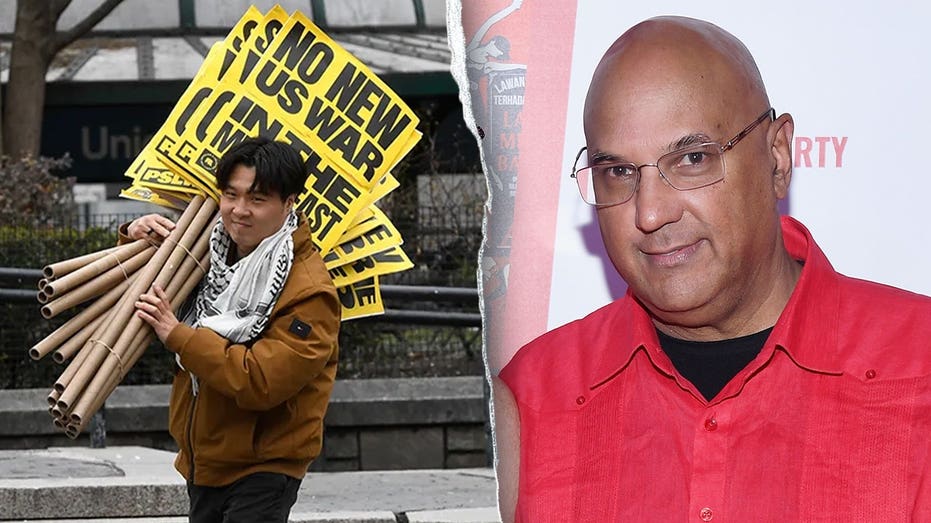
Fox News Digital reports that, as of July 22, 2026, the House Ways and Means Committee has formally issued subpoenas to three progressive nonprofits, demanding records tied to more than $39 million allegedly funneled by tech entrepreneur Neville Roy Singham.
The House Ways and Means Committee subpoenaed People’s Forum Inc., BreakThrough News, and Tricontinental Institute on July 21, 2026, alleging they failed to provide any documents related to $39 million transferred from Neville Roy Singham’s entities.
Subpoena Overview: July 21 Letters from Ways and Means Committee
On July 21, 2026 the committee dispatched three separate letters, each naming one of the targeted nonprofits and citing a lack of response to earlier information requests. Committee chair Rep. Jason Smith (R‑MO) signed the letters, underscoring the political weight of the move.
Shifting from routine oversight to a forceful investigative stance suggests the panel is treating the matter as a de‑facto law‑enforcement operation, a pattern reminiscent of the 2022 GOP‑led inquiries into conservative think tanks that turned congressional oversight into a prosecutorial tool.
Targeted Organizations: People’s Forum, BreakThrough News, Tricontinental Institute
People’s Forum Inc., based in New York, functions as an activist hub; BreakThrough News operates as a left‑wing nonprofit media outlet; and Tricontinental: Institute for Social Research describes its mission as “national liberation Marxism.”
By singling out entities that span grassroots activism, digital journalism, and academic research, the committee appears intent on dismantling a coordinated network that amplifies leftist narratives, rather than merely chasing isolated streams of cash.
Neville Roy Singham’s Financial Trail: $39 Million Across Three Groups
Investigators have traced more than $39 million from companies linked to Singham to the three nonprofits, a sum that exceeds the annual budgets of many small NGOs. Singham, a self‑identified Marxist tech entrepreneur, has also funded progressive technology platforms.
Framing Singham as the financial linchpin turns the probe into a money‑laundering case on paper, yet it simultaneously criminalizes a style of ideological philanthropy that contrasts sharply with the opaque donor practices common among mainstream foundations.
Political Climate: Rubio’s Far‑Left Terror Summit and Republican Narrative
Sen. Marco Rubio recently convened a summit of 65 officials, branding far‑left groups as “poisonous” and “masked as equality.” Law‑enforcement agencies have stepped up scrutiny of left‑leaning NGOs, echoing a broader Republican effort to link progressive activism with national‑security threats.
Critics argue the narrative inflates security concerns to justify expanded surveillance, a tactic that mirrors the post‑9/11 expansion of domestic intelligence powers used against dissenting voices in earlier decades.
Legal Precedent & Risks: Past Conservative Think‑Tank Subpoenas
Congressional subpoenas previously targeted conservative think tanks in 2022, leading to contempt citations and, in some cases, fines exceeding $100,000. Noncompliance with the current subpoenas could likewise trigger contempt of Congress charges, possibly resulting in imprisonment.
This development could reset the boundary of congressional authority, extending it from financial oversight into direct enforcement, a shift that may chill charitable expression across the entire nonprofit sector, not just progressive outfits.
Implications for the Left‑Wing Nonprofit Sector: Funding, Audits, and Donor Anonymity
More than 200 progressive NGOs receive federal assistance, many of which depend on donor anonymity to protect contributors from political retaliation. The present subpoenas may spark a wave of audits targeting similar groups, amplifying public suspicion of “foreign influence.”
Even absent conclusive findings, the investigation could force nonprofits to allocate staff to compliance work, diverting resources from programmatic goals and potentially deterring future donors, thereby reshaping the financial architecture of progressive advocacy in the United States.
For community organizers in the Midwest, the ripple effect means local chapters could face delayed grant payments from foundations wary of heightened scrutiny, a concrete consequence that national headlines often overlook.
For more on this, see house panel subpoenas 3 left wing groups probe 39m tied marxist tycoon neville singham.
Questions Readers Are Asking
What the Next Congressional Deadline Could Mean for Progressive NGOs
The Ways and Means Committee has set a deadline of August 15, 2026 for the nonprofits to comply, after which it may refer the matter to the full House or seek a contempt citation. Should the organizations file a legal challenge, the case could quickly ascend to the D.C. Circuit, where a ruling would clarify the balance between legislative oversight and nonprofit free‑speech protections.
Stakeholders anticipate that a decisive court outcome will either reinforce congressional reach into the nonprofit arena or carve out stronger safeguards for politically active charities. Either scenario will shape fundraising strategies, compliance budgets, and the broader dialogue about the role of left‑leaning civil society in American politics for years to come.