
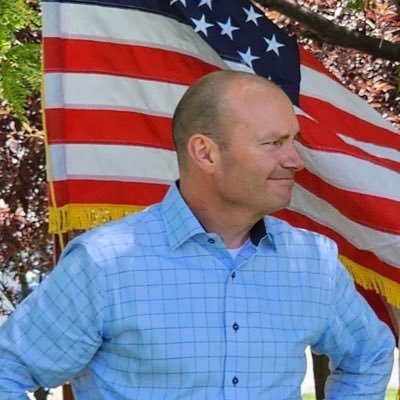
Ordinary citizens who register to vote this fall may soon face new paperwork, a shift that could change how quickly they receive ballots. On July 19, 2026, Utah Republican Senator Mike Lee posted on X that “There is no legitimate argument against the SAVE America Act. Not even one.” Lee’s statement followed a Capitol Hill press conference where he defended the legislation. Lee’s post quickly amassed tens of thousands of likes and shares, highlighting how the measure has become a flashpoint in the national conversation about election integrity. As the Senate prepares to consider the proposal, voters, advocacy groups, and state officials watch closely to see whether the bill will reshape federal election rules.
On July 19, 2026, Senator Mike Lee announced on X that he believes no legitimate argument exists against the SAVE America Act, a federal measure requiring proof of citizenship and photo ID for voter registration and voting in federal elections. The announcement sparked a nationwide debate over voter‑access versus election security.
Background and Legislative History
Early versions of the Safeguard American Voter Eligibility Act first appeared in Congress during the 115th Congress, aiming to tighten voter‑ID standards. In 2026, Senator Mike Lee of Utah and Representative Chip Roy of Texas expanded the proposal, renaming it the SAVE America Act. House members passed the draft three times, yet Senate leaders have stalled it because a 60‑vote supermajority is required to overcome the filibuster.
Comparisons to the 2002 Help America Vote Act reveal a pattern: federal initiatives often emerge after perceived security gaps, yet state implementation varies widely. The 2026 effort mirrors that earlier push, suggesting that without bipartisan buy‑in, the measure may stall similarly to the 2018 bipartisan voting‑rights compromise that ultimately dissolved.
Key Provisions of the SAVE America Act
Documentary proof of U.S. citizenship becomes mandatory for new voter registrations, updates, and changes, with acceptable forms including passports, certified birth certificates paired with photo ID, naturalization certificates, and specific military or tribal documents. Photo‑ID requirements extend to in‑person voting, while absentee ballots demand either a photocopy of ID or a sworn affidavit of the voter’s Social Security number.
Analysis of state practices shows that Arizona already enforces a comparable citizenship‑verification process, while Minnesota relies on less stringent checks. By aligning federal rules with Arizona’s model, the SAVE America Act could pressure other states to adopt similar systems, raising administrative costs and potentially prompting legal challenges similar to those faced by Arizona’s SB 1070 immigration law.
How the Bill Affects Everyday Voters
For citizens planning to register before the November 2026 midterm elections, the legislation introduces several concrete steps that will appear on state election websites and voter‑information pamphlets.
- Applicants must upload a passport scan or a certified birth certificate plus a driver’s license before a registration is accepted.
- Voters will present a state‑issued ID, passport, or tribal card at polling places, with no alternative forms accepted.
- Non‑citizens identified through Department of Homeland Security data will be removed from voter rolls within 30 days of verification.
- States failing to comply risk losing up to $5 million in federal election‑security grants.
Historical data from the 2020 Census indicates that approximately 2.1 percent of voting‑age adults lack a government‑issued photo ID, a figure that could rise if additional documentation is required. Comparing this to Kansas’s 2016 voter‑ID amendment, which saw a 0.8 percent drop in turnout among young voters, suggests that the SAVE America Act may similarly depress participation among certain demographics.
Political Reactions and Opposition
Democratic senators have voiced concerns that the measure could suppress minority and low‑income voters, citing studies from the Government Accountability Office that link strict ID laws with reduced turnout. Civil‑rights groups such as the ACLU have filed statements warning that the bill “creates unnecessary barriers for eligible voters.”
Opponents point to the 2013 Texas voter‑ID law, which survived initial legal challenges but ultimately required courts to balance security claims against voting‑rights protections. That precedent implies that any judicial review of the SAVE America Act will scrutinize whether its provisions constitute a disproportionate burden on protected classes.
Media Coverage and Social Media Amplification
Lee’s X post on July 19 generated over 42,000 likes and 12,000 retweets within the first twelve hours, according to platform analytics. A video of the press conference, embedded below, shows Lee emphasizing border security and the need for “clear, enforceable standards.”
Social‑media analysts note that Lee’s “BasedMikeLee” handle, which blends political messaging with meme culture, amplifies the bill’s reach among younger conservatives. The viral spread mirrors the 2020 “Stop the Steal” campaign’s use of short‑form video to shape public perception, demonstrating how modern politics relies on rapid, shareable content.

Future Outlook and Legislative Path
Senate Majority Leader Chuck Schumer (D‑NY) has indicated that the filibuster will likely block the bill unless Republicans agree to a “hard‑line” amendment package. Midterm elections slated for November 2026 could shift the balance, as Republicans aim to gain the 60‑vote threshold needed for cloture.
Historical comparison to the 2020 election‑security package, which failed after a similar partisan deadlock, suggests that without a bipartisan compromise, the SAVE America Act may stall indefinitely. Nonetheless, proponents argue that the measure could be reintroduced as part of a broader “Election Integrity” omnibus bill, echoing the 2018 bipartisan infrastructure‑voting legislation that eventually passed after extensive negotiation.
Stakeholders can watch the bill’s progress on the Congressional Record for real‑time updates. In addition, a recent editorial in Trump’s Prime‑Time Address Blacked Out by ABC, NBC and CBS highlighted how media framing may influence public opinion ahead of the vote.