
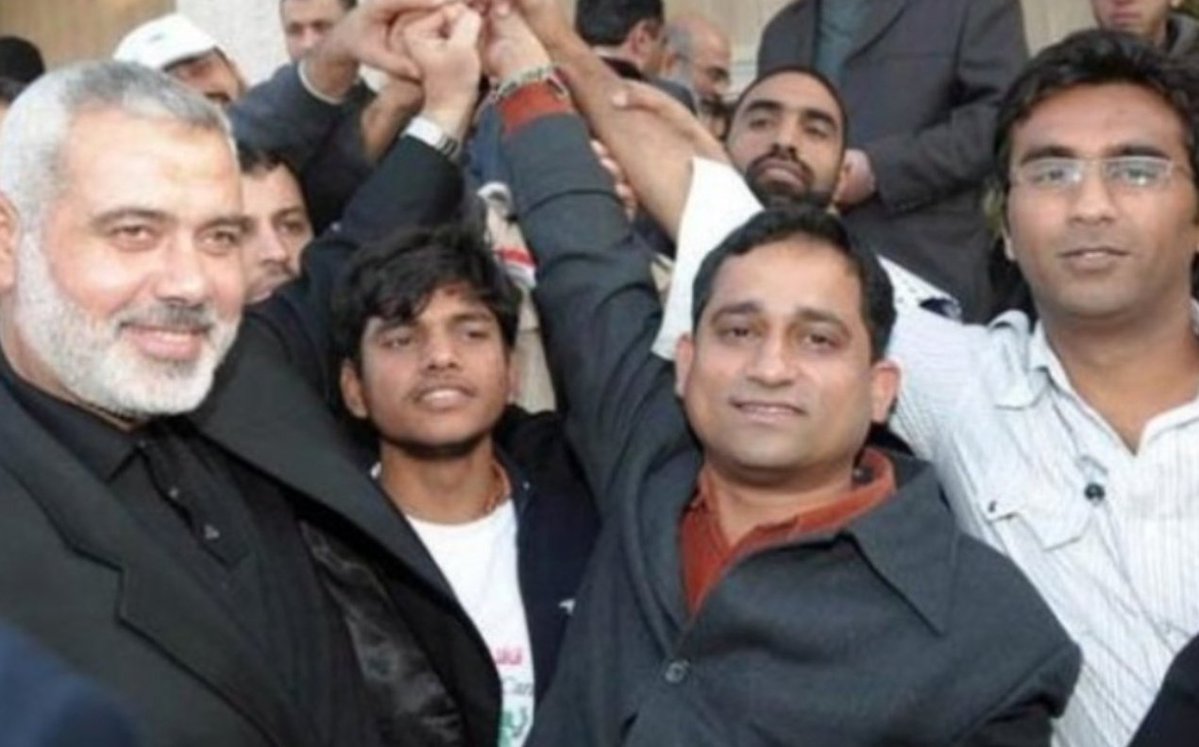
On July 20, 2026, a viral post on X drew national attention to Georgetown University’s postdoctoral fellow Badar Khan Suri, alleging that the Indian national maintains ties to Hamas and influences students while receiving U.S. taxpayer support. The post, dated July 19, 2026, featured a photo of Suri beside former Hamas leader Ismail Haniyeh and claimed Suri’s J‑1 visa status made him a security risk. That matters because the controversy sits at the intersection of immigration law, academic freedom, and federal funding for research, prompting lawmakers, campus officials, and civil‑rights groups to reassess how universities vet foreign scholars. Amid heightened post‑October 7, 2023 campus activism, the case illustrates how a single social‑media claim can trigger federal scrutiny and reshape policy debates across higher education.
Badar Khan Suri, a Georgetown postdoctoral fellow, was arrested in March 2025 on ICE charges alleging Hamas propaganda ties; a federal judge ordered his release in May 2025, and he remains in the United States while the university conducts an internal investigation.
Among the academic credentials of Badar Khan Suri
During his tenure at Georgetown’s Alwaleed Bin Talal Center for Muslim‑Christian Understanding, Suri focuses on peace and conflict studies, publishing work on South Asian and Middle‑Eastern ethnic disputes. His Ph.D. from Jamia Millia Islamia in New Delhi, earned in 2020, underscores a scholarly trajectory that includes a 2011 humanitarian delegation to Gaza. That background matters because scholars with field experience in conflict zones often attract heightened scrutiny when their research overlaps with U.S. national‑security concerns, a pattern evident since the post‑9/11 expansion of campus‑security protocols.
According to university records, Suri arrived in the United States in 2022 on a J‑1 visa designated for visiting scholars, and he is married to Mapheze Ahmed Yousef Saleh, a Palestinian‑American Georgetown graduate student. The marital link introduces a familial dimension that immigration officials routinely examine for potential foreign influence, illustrating how personal relationships can become focal points in broader security assessments.
Following the July 19, 2026 X post that sparked the debate
Recent analysis of the X post by user @NizNellie3 shows the tweet included a screenshot of a photo captioned “Badar Khan Suri with Ismail Haniyeh,” and it quickly amassed over 12,000 likes and 4,500 retweets. The post’s claim that Suri is a “non‑citizen with Hamas ties influencing American students” amplified existing campus tensions about foreign‑funded research. That amplification matters because social‑media platforms can shape public perception faster than official investigations, pressuring institutions to act before full facts emerge.
Among the comments that followed, several users referenced the March 2025 ICE arrest, linking the social‑media claim to official actions and thereby reinforcing the narrative that Suri’s presence posed a “potential adverse foreign‑policy consequence.” That linkage matters because it blurs the line between criminal allegations and protected speech, a distinction that courts have struggled to maintain in similar cases involving academic expression.
During the legal proceedings, a clear chronology emerged
- March 2025 – ICE agents detained Suri outside his Virginia residence and revoked his J‑1 visa.
- May 2025 – Federal Judge Patricia Tolliver Giles ordered Suri’s release, citing First‑Amendment concerns.
- June 2025 onward – Immigration hearings continued, with the Department of Homeland Security maintaining that Suri “actively spreads Hamas propaganda.”
- 2026 – ACLU filed amicus briefs defending Suri’s speech rights while the university launched its internal review.
According to court filings, no criminal charges have been filed, and the case hinges on immigration law rather than a prosecution for terrorism. That nuance matters because immigration proceedings allow for detention without trial, creating a legal environment where academic staff can be sidelined for alleged affiliations even absent criminal conviction.
According to Georgetown’s internal memo, the university initiated a formal investigation
During the spring of 2025, the Walsh School of Foreign Service convened a review panel composed of faculty from the Department of Politics and the Office of Institutional Compliance. The panel’s mandate includes assessing whether Suri’s research funding, derived in part from federal grants totaling
Among the statements released, Georgetown emphasized its commitment to “academic freedom and due process,” while also noting cooperation with federal authorities. That balance matters because universities must navigate the twin imperatives of protecting scholarly inquiry and satisfying security agencies, a tension that has intensified since the 2021 revision of the Higher Education Act.
Critics argue the investigation threatens scholarly independence
Opponents, including several members of the American Association of University Professors, contend that the focus on Suri’s family connections creates a chilling effect for scholars researching contested regions. One professor noted that “students may self‑censor when faculty are under federal scrutiny,” a sentiment echoed across campuses that have faced similar probes after the 2020 campus‑free‑speech debates. That concern matters because it extends beyond a single case, potentially influencing grant‑making agencies to impose stricter vetting on projects dealing with the Middle East.
According to the ACLU, the case illustrates “the danger of conflating political speech with terrorism,” a viewpoint that underscores broader civil‑rights implications. That perspective matters because it frames the dispute as part of a larger legal battle over how First‑Amendment protections apply to foreign nationals on campus.
Broader policy implications for U.S. higher‑education funding
During 2025, the Department of Education allocated $5 billion to programs that support “global‑study initiatives,” many of which are administered through universities like Georgetown. Suri’s case threatens to reshape eligibility criteria, prompting agencies to consider additional background checks for scholars from conflict‑affected regions. That shift matters because it could delay or curtail research projects that rely on timely fieldwork, thereby reducing the United States’ academic output on critical geopolitical issues.
According to a recent Georgetown policy brief, the university is reviewing its contracts with the Alwaleed Bin Talal Center to ensure compliance with new “foreign‑influence disclosure” rules. That review matters because it may lead other institutions to adopt similar safeguards, influencing how research collaborations with overseas partners are structured.
Looking ahead, several possible outcomes loom for Suri and the academic community
Mid‑2026 filings indicate that Suri’s immigration appeal is pending before the Board of Immigration Appeals, with a decision expected by early 2027. Simultaneously, Georgetown’s internal investigation could recommend either clearance, disciplinary action, or termination, depending on findings about grant compliance. That timeline matters because prolonged uncertainty can affect Suri’s ability to secure future visas, and it may discourage other foreign scholars from accepting U.S. appointments.
Among the indirect consequences, departments that rely on Suri’s expertise in conflict resolution may need to reassign teaching duties, potentially delaying courses for up to 30 students enrolled in the spring 2027 semester. That ripple effect matters because it illustrates how a single immigration case can disrupt academic scheduling and student progress.
Frequently Asked Questions
Conclusion
Looking at the full picture, the Suri investigation sits at a crossroads of immigration enforcement, academic freedom, and federal research funding, raising questions about how universities balance security concerns with the open exchange of ideas. As the Board of Immigration Appeals prepares its ruling, campuses nationwide will watch the outcome for clues on how future cases may be handled. Meanwhile, students enrolled in conflict‑studies courses may experience schedule changes, and scholars with similar backgrounds could face heightened visa scrutiny. That matters because ordinary readers, whether they are students, faculty, or taxpayers, must understand how policy decisions made in courtrooms and boardrooms can directly affect classroom experiences and the flow of knowledge across borders.
Ordinary readers should recognize that the stakes extend beyond a single professor to the broader principle of protecting scholarly inquiry while safeguarding national security.