
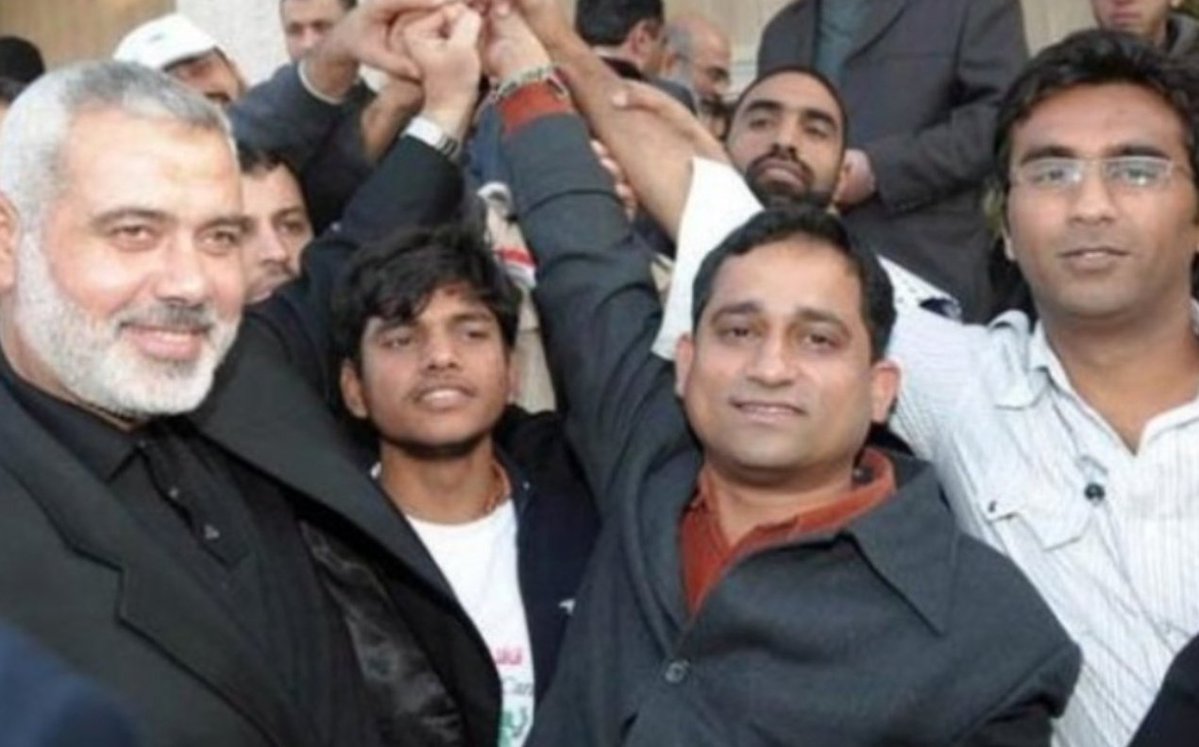
A federal inquiry into Georgetown University professor Badar Khan Suri opened on July 20, 2026, after a viral X post resurrected accusations that he maintains Hamas connections and leverages taxpayer‑funded research to influence American students. The probe matters because it sits at the intersection of immigration law, academic freedom, and national‑security policy, raising questions about how universities vet foreign scholars and how the government balances free speech with counter‑terrorism concerns.
Federal investigators began probing Badar Khan Suri, a Georgetown postdoctoral fellow, on July 20, 2026, following allegations that he has ties to Hamas and may have used his academic position to influence U.S. students. The investigation focuses on potential foreign‑influence violations and immigration status issues.
Who Is Badar Khan Suri?
Badar Khan Suri, an Indian national, serves as a postdoctoral fellow at Georgetown’s Alwaleed Bin Talal Center for Muslim‑Christian Understanding (ACMCU) within the Walsh School of Foreign Service. He earned a Ph.D. in Peace & Conflict Studies from Jamia Millia Islamia in New Delhi and arrived in the United States on a J‑1 visa in 2022. Married to Mapheze Ahmed Yousef Saleh, a Palestinian‑American citizen and Georgetown graduate student, Suri is father to three children and traveled to Gaza in 2011 as part of a humanitarian delegation.
His research on ethnic conflict and peace processes grants him access to policy‑making circles, a factor that amplifies scrutiny when foreign‑origin scholars are involved. Comparatively, the 2018 Department of Justice review of a Chinese scholar at MIT highlighted how expertise in sensitive regions can trigger security reviews, suggesting Suri’s case fits an emerging pattern rather than an isolated incident.
Allegations and Government Actions
In March 2025, ICE agents detained Suri outside his Virginia residence, charging him under immigration statutes for “actively spreading Hamas propaganda and promoting antisemitism on social media.” Secretary of State Marco Rubio (acting in his capacity as a senior official) labeled Suri’s presence a potential adverse foreign‑policy consequence, prompting a revocation of his J‑1 visa.
The government’s reliance on immigration law rather than criminal prosecution mirrors the 2020 ICE operation against a Syrian activist, where authorities used similar statutes to curb perceived propaganda. This strategic choice matters because it sidesteps the higher evidentiary bar of criminal courts, allowing quicker removal actions while raising civil‑liberties concerns.
Legal Proceedings and Court Decisions
Federal Judge Patricia Tolliver Giles ordered Suri’s release in May 2025, citing First‑Amendment protections for academic speech and Fifth‑Amendment due process rights. Following the ruling, Suri resumed his teaching duties while his immigration case proceeded through appellate review, with the ACLU filing amicus briefs defending his free‑speech claims.
This judicial stance highlights a tension echoed in the 2019 Ninth Circuit decision that protected university faculty discussing foreign conflicts, underscoring that courts are increasingly wary of conflating scholarly expression with material support for designated terrorist organizations. The outcome influences how universities craft policies around foreign‑funded research, potentially prompting stricter disclosure requirements.
How This Unfolded
- July 19, 2026 – An X post by @NizNellie3 went viral, pairing a photo of Suri with former Hamas leader Ismail Haniyeh and alleging non‑citizen status.
- July 20, 2026 – Department of Homeland Security announced a federal investigation, citing possible foreign‑influence violations.
- August 2, 2026 – Georgetown issued a statement affirming Suri’s right to due process while reviewing internal security protocols.
- September 15, 2026 – The Office of the Attorney General filed a supplemental affidavit expanding the scope to include alleged social‑media propaganda.
- October 5, 2026 – A federal grand jury convened to consider whether immigration charges merit removal.
Rapid escalation from a single social‑media claim to a full‑scale federal probe illustrates how digital platforms can accelerate law‑enforcement attention, a dynamic also observed after the 2021 Capitol‑riot misinformation surge, where online rumors prompted swift investigative actions.
Reactions and Policy Debate
Critics argue the investigation threatens academic freedom, pointing to ACLU remarks that “targeting a scholar for his family’s political history sets a dangerous precedent.” Republican lawmakers have called for tighter vetting of foreign scholars, while several Democratic senators caution that over‑reliance on immigration tools could chill protected speech.
That debate matters because it could reshape federal guidance on foreign‑influence reporting for universities receiving more than
Frequently Asked Questions
Conclusion
As the federal grand jury convenes in early October, the outcome will likely dictate whether Suri faces removal or continues his academic work under heightened oversight. A decisive ruling could prompt the Department of Justice to issue new guidance on “foreign‑influence investigations” for scholars, potentially reshaping how U.S. universities manage international collaborations. Stakeholders on both sides of the debate will be watching the October 15, 2026 hearing for clues about the balance between national security and academic liberty moving forward.