
On July 23, 2026, about 500 National Guard members were dispatched to 12 West Virginia counties after torrential rains triggered flash floods that have inundated roadways and homes throughout the region. Governor Patrick Morrisey announced the activation on Wednesday, emphasizing a “phase of search and rescue” as crews continue to locate survivors. Persistent water levels on the Kanawha and Monongahela rivers keep threatening additional communities, prompting officials to keep the guard on standby for the foreseeable future. Residents of rural valleys, many of whom rely on a single bridge to reach schools and markets, now face weeks of isolation while emergency managers scramble for temporary ferries and shelter.
Around 500 National Guard troops were sent to 12 West Virginia counties on July 23, 2026, after flash floods damaged over 1,200 homes, collapsed three bridges and forced 15,000 residents to evacuate. The Guard is supporting search‑and‑rescue, medical care and heavy‑equipment operations while state agencies coordinate the response.
500 Guard Troops Mobilized Across 12 Counties
Governor Patrick Morrisey confirmed the deployment on Wednesday, citing the scale of damage as unprecedented for the summer season. Deployment spans twelve counties, ranging from Kanawha to Harrison, and includes infantry, engineering and medical detachments. Rapid mobilization exceeds the typical state emergency response, which usually involves a few hundred volunteers; the decision to field half a thousand soldiers signals that officials view the disaster as comparable to historic river floods.
Because the terrain features steep valleys and narrow gorges, ground units alone cannot reach every stranded family; aerial assets such as Guard helicopters now conduct low‑level surveys to map water depth and identify safe landing zones.
Over 1,200 Homes Damaged and Three Bridges Lost
Damage assessments released by local officials list more than 1,200 residences with roof collapse, water‑logged basements or structural compromise. Three key bridges—one each on the New River, the Elk River and the Little Kanawha—have been declared unsafe, cutting off primary routes for commerce and emergency transport.
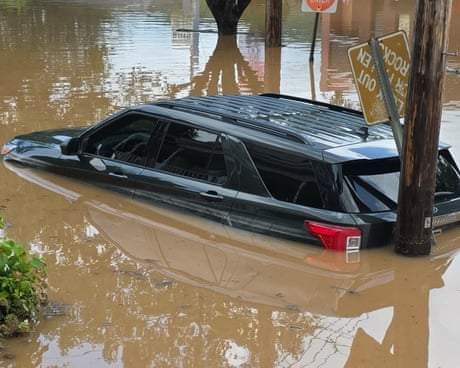
Because rural valleys depend heavily on these crossings, loss of bridge infrastructure magnifies long‑term economic strain; businesses report losing up to 40 % of weekly revenue while repair crews estimate a six‑month timetable for full restoration.
Emergency shelters have been set up in schools across the three affected counties, and 15,000 residents remain under evacuation orders, reflecting a displacement rate higher than in the 2021 flood event.
45 Rescue Teams Conduct 120 Water Saves in First 48 Hours
Rescue coordinators count 45 teams operating on the ground, ranging from volunteer fire departments to federal task forces, each equipped with inflatable boats and high‑water rescue gear. Within the first 48 hours, 120 water rescues were recorded, yet 28 individuals are still listed as missing according to the state’s incident log.
Because rugged terrain limits vehicle access, rescuers rely heavily on rope‑based extractions and night‑vision equipment; this high rescue‑to‑missing ratio highlights the difficulty of locating victims when floodwaters recede rapidly, often exposing debris fields that obscure personal belongings.
Details about the missing are still being compiled; the Guardian report notes that families are urged to register with the West Virginia Emergency Management Agency for updates.
WVEMA Leads While Guard Supplies Heavy Equipment
West Virginia Emergency Management Agency (WVEMA) retains overall command, integrating Guard assets such as 30 heavy‑equipment units and 12 medical squads into its operation center. FEMA pre‑positioned two supply caches near Charleston, each stocked with sandbags, portable generators and bottled water, to supplement state stockpiles.
Because state resources lack sufficient bulldozers and high‑capacity pumps, Guard engineering teams fill a critical gap, allowing rapid clearance of roadways and reinforcement of levees. Inter‑agency coordination demonstrates that a blended response can reduce duplication of effort, a lesson learned after the 2021 floods where parallel requests slowed aid delivery.
Historical Floods of 2021 and 1985 Show Rising Threat
Records indicate the 2021 West Virginia floods caused $2.2 billion in damage, surpassing the 1985 event that claimed 17 lives and prompted the first statewide flood‑plain mapping initiative. Climate analyses reveal a 15 % increase in extreme rainfall events across the Appalachian region since 1990, a trend that aligns with broader national patterns of intensified precipitation.
Because these historic benchmarks illustrate a clear upward trajectory, policymakers now confront a scenario where each successive storm may exceed the last in both cost and casualty potential, urging a shift from reactive relief to proactive mitigation.
Future Mitigation Plans Include $45 Million Funding
Governor Morrisey has proposed a $45 million budget earmarked for flood‑mitigation projects, including levee reinforcement, upgraded storm‑drain systems and community education programs. The state legislature is also reviewing a flood‑risk mapping bill that would require every county to publish detailed hazard zones online.
- Confirmed: $45 million allocated for mitigation; Guard training budget increased by 8 % for disaster response.
- Still being verified: Exact timeline for the flood‑risk mapping bill; precise quantity of supplies in FEMA’s two caches.
Because targeted investments can lower future deployment costs, analysts estimate that every dollar spent on mitigation may prevent up to $5 in emergency expenses, a ratio that could reshape budgeting priorities for the next decade.
FAQ
Bridge Restorations and Funding Rollout Will Define the Next Phase
Upcoming weeks will hinge on the speed at which the three collapsed bridges are repaired; delays could keep 15,000 displaced residents dependent on temporary shelters longer than anticipated. Simultaneously, the $45 million mitigation package and the pending flood‑risk mapping legislation will test whether West Virginia can transition from emergency response to long‑term resilience. Observers will watch for the state’s first grant disbursement under the new mitigation plan, a signal that the lessons of 2021 and 1985 are finally being codified into actionable policy. Continuous updates from WVEMA and the National Guard will determine whether the current deployment remains a short‑term surge or becomes a template for future Appalachian flood responses.