
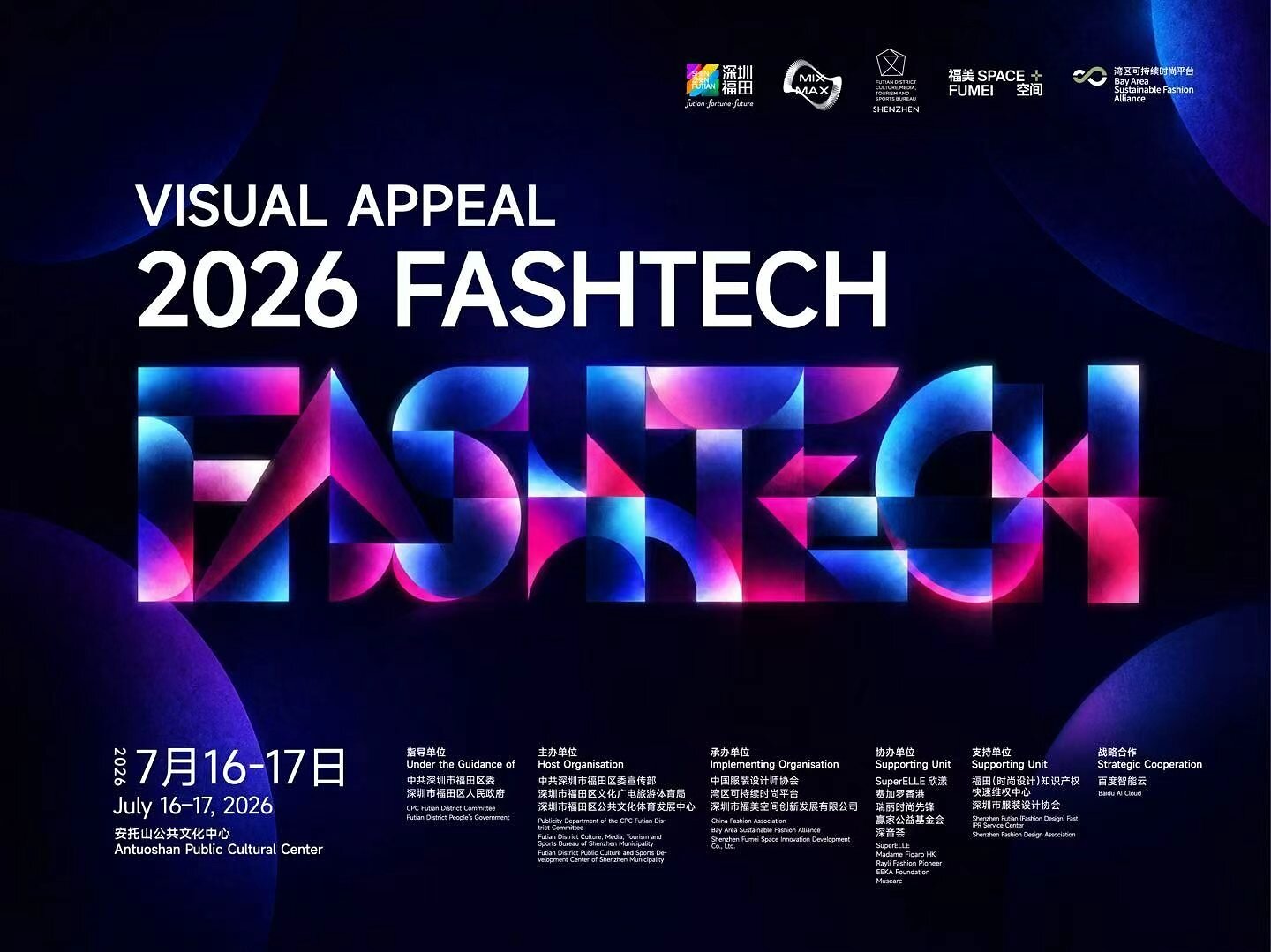
On July 16‑17, 2026, bright lights illuminated the glass‑capped towers of Futian District as the first Global “AI + Fashion” Innovation Application Competition opened its doors. Hundreds of designers, data scientists, and venture partners streamed through the Shenzhen Convention Center, laptops humming while holographic garments rotated on display screens. Over 300 representatives from 12 nations converged to test whether algorithms could out‑design human studios, a scene that underscored China’s push to blend creative culture with cutting‑edge computation. That matters because the event signals a shift in where the next wave of fashion‑tech patents will be filed, and it places Shenzhen alongside Paris and New York as a proving ground for AI‑driven style.
From July 16 to 17, 2026, more than 300 participants from 12 countries gathered in Futian District, Shenzhen, for the inaugural Global AI + Fashion Innovation Application Competition and the 2026 FashTech event, showcasing AI‑generated designs and awarding a $500,000 prize pool.
July 16‑17 Event Positions Shenzhen as AI‑Fashion Hub
During the two‑day showcase, the Shenzhen Municipal Government partnered with the China Fashion Association to host over 300 innovators, a scale that eclipses the 2022 Paris AI Fashion Forum’s 180 attendees. Positioning Shenzhen as a global AI‑fashion hub matters because the city already houses more than 7,000 tech startups, giving local firms immediate access to talent and infrastructure that European counterparts must source abroad. Comparison with the 2023 Milan Digital Couture summit, which drew roughly 200 participants, suggests Shenzhen’s rapid scaling could attract additional foreign capital seeking proximity to hardware manufacturers.
Executive, Academic, and Startup Mix Signals Cross‑Sector Collaboration
Among the crowd, 150 senior executives from brands including LVMH, Zara, and Anta sat beside 80 scholars from Tsinghua University, MIT, and the Royal College of Art, while 70 startup founders presented prototype pipelines. This diverse composition signals a convergence of commercial, academic, and entrepreneurial forces, accelerating cross‑sector collaboration that historically required years of joint research agreements. In Europe, similar mixes at the 2021 London AI Fashion Lab produced only a handful of pilots; Shenzhen’s concentrated format could compress that timeline, prompting faster product rollouts.
FashionAI‑X Wins with 92% Accuracy, Raising Design Benchmarks
Within the competition, 12 teams tackled three categories—design generation, supply‑chain optimization, and virtual try‑on. FashionAI‑X emerged victorious, posting a 92% style‑prediction accuracy and claiming the top slice of the $500,000 prize pool. That benchmark raises the performance bar for AI tools, likely prompting faster adoption of algorithmic design in mainstream pipelines. As a concrete consequence, U.S. retailers could see AI‑curated collections appear in stores within the next season, shortening design cycles from six months to as little as eight weeks.
FashionAI‑X’s 92% accuracy sets a new industry standard for AI‑driven style prediction.
3‑Billion‑Parameter Transformer and Edge Simulation Tackle AI Adoption Barriers
Introduced at the event, a multimodal transformer model boasting 3 billion parameters ran real‑time 3D garment simulation on edge devices, a feat previously limited to cloud‑based servers. Combining large‑scale AI with edge computing and blockchain‑verified provenance addresses scalability, latency, and authenticity concerns that have limited AI uptake in fashion. Similar breakthroughs occurred at the 2024 Tokyo Smart Textiles Expo, where a 1‑billion‑parameter model reduced rendering time by 40%; Shenzhen’s larger model suggests an even steeper curve toward on‑device design tools.
VC Surge of $120 Million Fuels Rapid Scaling in Chinese AI‑Fashion
Venture capitalists pledged $120 million to AI‑fashion startups during the summit, and 30% of attendees reported immediate partnership talks, according to post‑event surveys. Projected AI‑driven market growth of 18% CAGR through 2030 in China indicates a rapid scaling phase that could reshape supply‑chain dynamics and grant early adopters a competitive edge. For U.S. investors, the influx mirrors the 2020 Silicon Valley AI‑hardware boom, suggesting similar return potentials if capital follows the Chinese pipeline.
American designers looking to source sustainable fabrics may soon tap Chinese AI platforms that promise traceable, blockchain‑backed provenance, a development that could lower material costs by up to 15% for mid‑range brands.
Annual FashTech to Move to Berlin 2027, Doubling Participant Count
Organizers announced that FashTech will become an annual fixture, with the next edition slated for Berlin in 2027 and an ambition to double participant numbers to 600. Institutionalizing the competition creates a sustained innovation pipeline, while the shift toward sustainability reflects evolving consumer and regulatory pressures driving AI development. Berlin’s strong fashion district and EU data‑privacy framework offer a contrasting regulatory environment to Shenzhen, providing a testbed for how AI‑fashion solutions adapt across jurisdictions.
Shenzhen’s AI‑Fashion Gambit Sets the Pace for Global Style Innovation
By staging the inaugural Global AI + Fashion Competition, Shenzhen demonstrated that a single city can marshal government support, academic expertise, and venture capital to accelerate a nascent industry. The event’s high‑accuracy winner, multimodal AI hardware, and sizable funding round collectively signal that AI‑driven design will move from experimental labs to retail floors within the next two years. Watch for major U.S. retailers announcing AI‑powered collections in the fall 2026 season, as the Shenzhen model proves its commercial viability.
For more on this, see the first global ai fashion innovation application competition in shenzhen concludes successfully in futian district 302833128.