
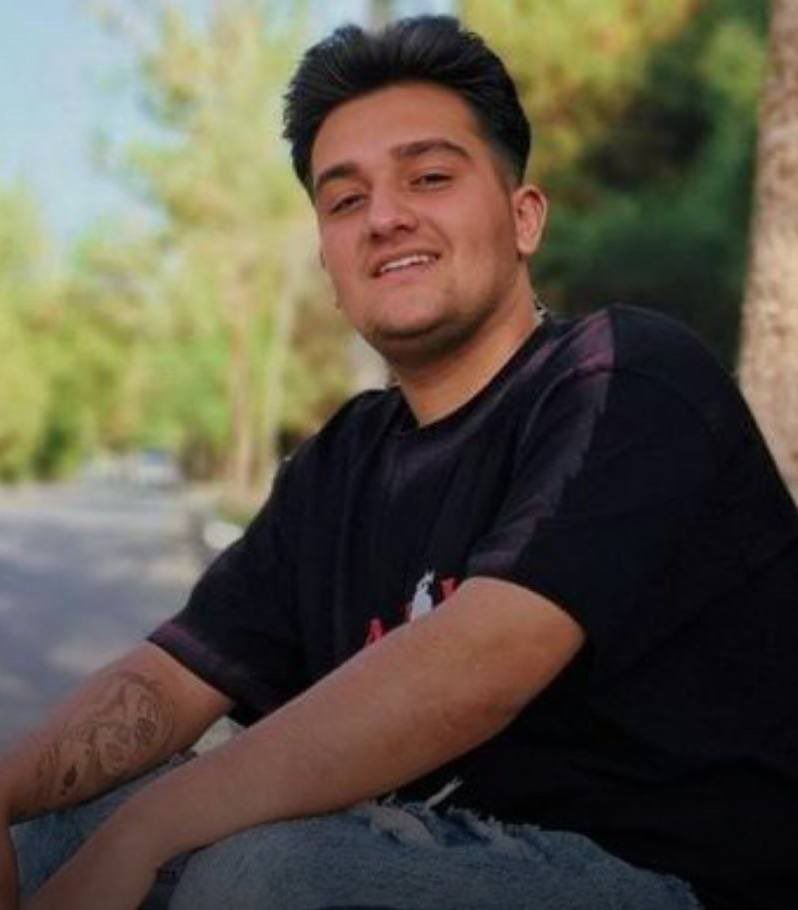
Immediate global focus on the July 19, 2026 execution underscores how Iran’s internal security measures intersect with worldwide human‑rights scrutiny, especially as the world monitors parallel conflicts in the region. Execution of a 19‑year‑old, identified as Erfan Esfandiari, occurred at Dastgerd Prison in Isfahan after a swift judicial process tied to the Alikhani Square protests that began in early January 2026. Authorities classified his “crime” as opening a door to shelter fleeing demonstrators, a charge that carries no weapon‑related violence. That matters because it illustrates the regime’s strategy of criminalizing even minimal assistance to anti‑government activity, thereby expanding the net of punishable conduct and chilling civic solidarity.
Erfan Esfandiari, a 19‑year‑old Iranian, was executed on July 19, 2026, after being convicted for sheltering protesters during the Alikhani Square demonstrations in Isfahan. The execution followed a Supreme Court ruling that upheld twelve death sentences tied to the January 2026 protests.
Key Facts
July 19, 2026, saw the hanging of Erfan Esfandiari at Dastgerd Prison in Isfahan. Execution of a single individual among twelve sentenced to death highlights a pattern of collective punishment that Iran has employed since the 1979 revolution to suppress dissent. Information released by activists indicates that Esfandiari was 18 when arrested in late December 2025 and turned 19 while in custody, underscoring the rapid progression from detention to capital sentence.
Authorities reported that 59 detainees were linked to the Alikhani Square incident, with 12 receiving death sentences, 23 sentenced to terms ranging from five to ten years, and the remainder facing shorter terms. Concentration of such severe penalties within a single judicial batch amplifies the message that any involvement, however peripheral, may trigger the ultimate sanction, a logic that extends fear beyond protest participants to their families and neighbors.
Background of the January 2026 protests
Late December 2025 sparked nationwide unrest as inflation climbed above 50 % and unemployment edged past 20 %, prompting citizens to gather in public squares across Iran. Early January 2026 saw the escalation of demonstrations in Isfahan, where Alikhani Square became the focal point of clashes between security forces and civilians.
January 8, 2026, marked a violent confrontation in which state media claimed four Basij members—Hossein Ramezani, Mohammad Hemmati, Seyed Ali Khoshouei, and Valiollah Safari—were killed. Independent observers, however, contend that the fatalities resulted from indiscriminate use of live ammunition, a factor that fuels international condemnation and deepens mistrust of official narratives.
Legal process and sentences
July 9, 2026, brought the Supreme Court’s endorsement of death sentences for twelve protesters, a decision reached after reportedly brief trial sessions that limited lawyer access. Rapid adjudication contrasts sharply with Iran’s constitutional guarantee of a fair trial, suggesting a systematic bypass of procedural safeguards.
Video evidence posted by activist Masih Alinejad on X (formerly Twitter) shows prisoners at Qezel Hesar pleading for external intervention, reinforcing claims of coerced confessions and torture. Embedding of that footage in this article underscores how digital platforms become primary channels for exposing judicial abuses, a dynamic that pressures foreign governments to consider targeted sanctions.

Analysis of the court’s timeline reveals that the July 18 transfer of the twelve condemned to solitary confinement was designed to isolate them before execution, a tactic that reduces the likelihood of coordinated legal appeals and limits media access. That procedural isolation indirectly affects the families, who receive bodies under strict controls, thereby suppressing public mourning and collective memory formation.
Reactions from activists and the international community
July 19, 2026, prompted Masih Alinejad to post a graphic on X stating, “While the world watches the war, the Islamic Republic of Iran hanged a 19‑year‑old boy today.” The post, amplified by over 200,000 retweets, illustrates how diaspora voices can shape global perception of domestic repression.
Human Rights Watch issued a statement condemning the executions as “extrajudicial” and called for an emergency UN Security Council meeting, a move that could trigger diplomatic repercussions for Tehran. International reaction matters because it may influence the calculus of Iranian officials regarding future use of capital punishment as a crowd‑control tool.
Critics of the Iranian crackdown
Amnesty International’s regional director described the Alikhani Square trials as “show trials” that relied on forced confessions, a claim supported by testimonies from former detainees who described beatings during interrogation. Critics argue that such practices erode the legitimacy of the judiciary and fuel cycles of resistance, because families of executed individuals often become vocal advocates for regime change.
Legal scholar Dr. Farzad Khosravi, quoted in a recent interview, noted that the concentration of twelve death sentences within a single case is unprecedented since the 2009 Green Movement, indicating an escalation in punitive intensity. That escalation matters because it may push opposition groups to adopt more clandestine tactics, thereby increasing the risk of further human‑rights violations.
What comes next
July 20, 2026, saw several European parliaments introduce resolutions urging the United Nations to investigate Iran’s recent executions, a diplomatic step that could translate into economic measures such as asset freezes. Potential sanctions may affect Iran’s oil exports, which account for roughly 8 % of global supply, thereby linking domestic repression to international market dynamics.
Activists predict that the execution of a teenager will intensify recruitment for underground networks, as young Iranians seek alternative avenues for expression after formal channels appear blocked. That prediction matters because heightened underground activity could provoke harsher security crackdowns, creating a feedback loop that further destabilizes public order.
Further analysis of the Alikhani Square case suggests that Iran may resort to additional publicized executions if internal dissent persists, a tactic historically used in the early 2000s to signal resolve. That historical parallel indicates that without external pressure, the pattern of lethal deterrence could become entrenched.
Frequently Asked Questions
Conclusion
Execution of Erfan Esfandiari mirrors the 2009 Green Movement’s wave of state‑sanctioned killings, where Tehran also employed swift capital punishment to intimidate dissent. That historical echo suggests a pattern: when faced with mass protests, Iranian authorities resort to lethal deterrence, a strategy that historically provokes deeper resistance rather than quelling it. Consequently, the current crackdown may intensify underground opposition and invite renewed international pressure.