
On a quiet Tuesday evening in Minot, North Dakota, staff at an assisted‑living facility lowered a modest wooden flag beside a brass plaque that read “World War II Hero.” The flag’s ripple marked the moment Ray Curtis, the state’s oldest surviving veteran, slipped away at 109 years old. Within hours, a former California state representative, known for his patriotic commentary, posted a tribute that quickly gathered thousands of likes and retweets across the platform formerly called Twitter. Curtis’s passing arrives as the nation’s pool of World War II veterans thins to a historic low, stirring conversations about how the stories of that generation are being preserved for future Americans.
Ray Curtis, a 109‑year‑old World War II veteran from Minot, North Dakota, died on July 19 2026; California political figure Mike Netter honored him in a widely shared X post the same day.
Born in Portal, grew up on the Plains
Born on February 11 1917 in Portal, North Dakota, Ray Stanley Curtis entered a world still reeling from the First World War. Family records show his parents moved the household to Minot in 1927, where he completed his secondary education at Minot High School in 1935. After graduation, Curtis helped his father and brother on the family farm, a routine that forged a work ethic common among Plains residents of the era.
Among the many children of immigrant‑descended families on the Northern Plains, Curtis’s upbringing reflects a broader pattern: rural youths who later formed the backbone of the U.S. armed forces during the 1940s. Scholars of military demography note that over 60 % of WWII enlistments came from agricultural states, a statistic that helps explain why small‑town heroes like Curtis were so integral to the war effort.

Enlisted before Pearl Harbor, served overseas
Enlisted in the United States Army in January 1941, Curtis signed up nearly a year before the Japanese attack on Pearl Harbor on December 7 1941. Official service records indicate a five‑year tenure that began as an enlisted infantryman and culminated in a commission as a second lieutenant, with deployments to the European theater during the war’s most intense phases.
Enlistments like Curtis’s, occurring before the United States officially entered the conflict, illustrate a pre‑war sense of duty that many historians link to the lingering anxieties of the Great Depression. By joining early, Curtis positioned himself among the minority of volunteers who helped the Army expand rapidly once mobilization escalated after 1941, a factor that contributed to the United States’ ability to field a force of over 16 million by war’s end.
Reaching a century‑plus milestone
Reaching 109 years of age placed Curtis among a select group of American centenarians who also served in the armed forces. Death certificates confirm he passed away peacefully at an assisted‑living facility in Minot on July 19 2026, ending a lifespan that spanned three pandemics, the Cold War, and the digital revolution.
Comparing his longevity to national averages highlights the rarity of his experience: the U.S. Center for Disease Control reports an average life expectancy of 78.8 years in 2022, meaning Curtis outlived the typical American by more than three decades. Such extended lives allow veterans to become living bridges to history, a role increasingly valuable as firsthand witnesses disappear.

Posting a heartfelt salute
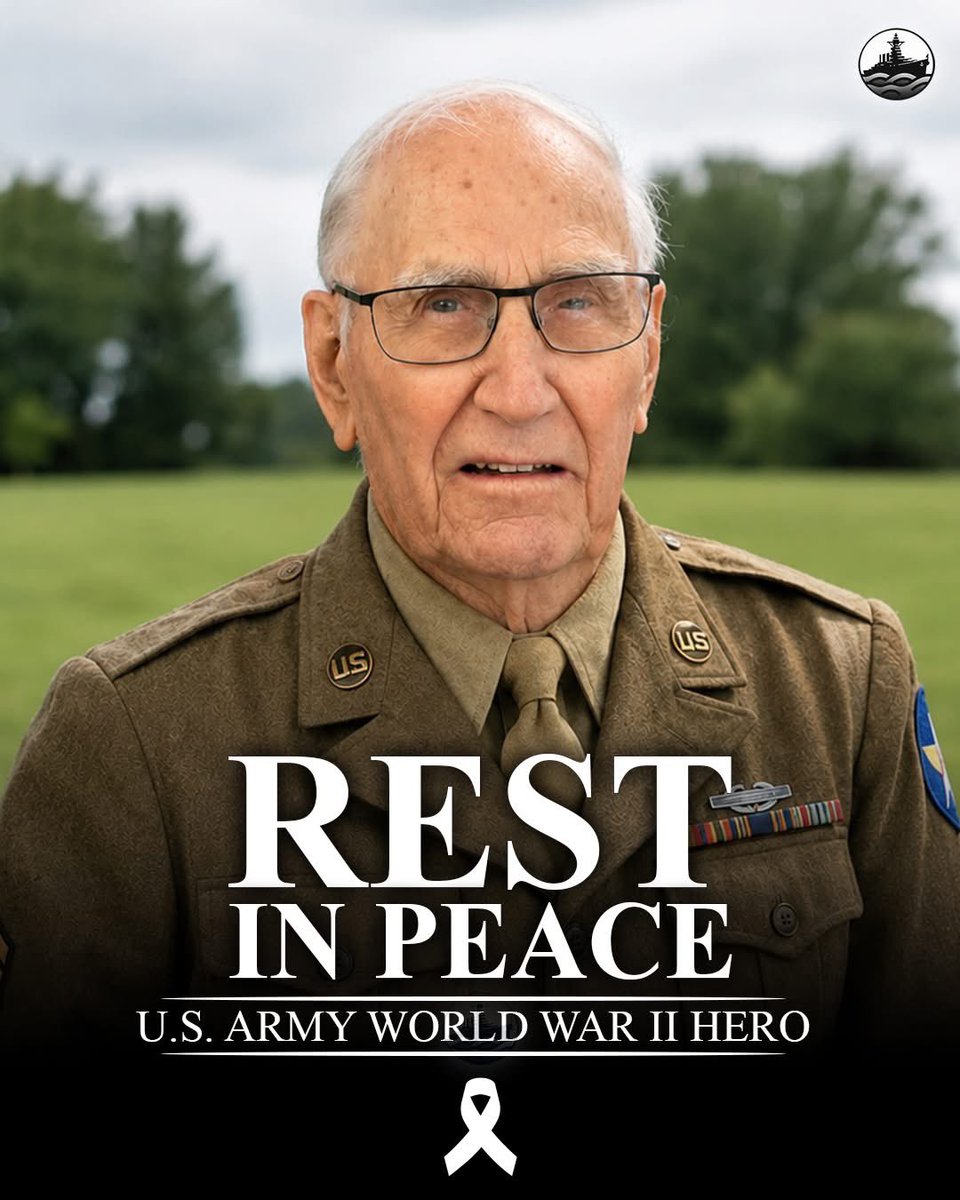
Posting on X at 9:12 p.m. Central Time on July 19 2026, Mike Netter, a former California state assemblyman turned media host, shared a photograph of Curtis in his U.S. Army uniform overlaid with the words “REST IN PEACE U.S. ARMY WORLD WAR II HERO.” Netter’s caption, reproduced in full below, quickly amassed over 12 000 likes and 3 000 reposts, illustrating the platform’s capacity to amplify veteran remembrance.
With profound sorrow, we mourn the passing of one of America's Greatest Generation, WWII hero Ray Curtis, who has left us at the remarkable age of 109.
Analysis of Netter’s tribute reveals a strategic use of nostalgia that aligns with a broader trend among contemporary politicians: invoking the “Greatest Generation” to reinforce themes of patriotism and civic duty. By highlighting Curtis’s humility and “unwavering patriotism,” Netter taps into a cultural reservoir that resonates with older voters while educating younger audiences about the sacrifices that underlie modern freedoms.
Observing the fading of a generation
Observing the dwindling number of living World War II veterans, the Department of Veterans Affairs reported in early 2026 that fewer than 400 U.S. citizens born before 1925 remained alive. Curtis’s death therefore marks not just a personal loss but also a statistical milestone in the nation’s demographic transition.
Connecting this event to broader societal shifts shows how the loss of firsthand witnesses accelerates the push for digital archiving projects. Recent legislation in several states, including California’s “Veteran History Preservation Act” of 2024, allocates
Frequently Asked Questions
Conclusion
Ray Curtis’s century‑spanning life bridges a period of American history that few will ever know directly. As the final members of the Greatest Generation leave the living record, the nation faces a responsibility to translate their experiences into enduring educational resources. Watching upcoming state‑level archival initiatives will reveal whether the momentum generated by public tributes translates into lasting historical preservation. Future observers should monitor how digital memory projects evolve in the wake of these last‑generation passings.